When James Damore’s internal memo on gender imbalance at Google was leaked in 2017, it caused a furore. In it, he wrote that one reason there are more men than women in the tech sector is because men and women are biologically different.
Men’s higher drive for status made them take on stressful tech jobs, he said, while women’s greater anxiety and lower tolerance for stress made the industry less appealing to them. He cited the influence of prenatal testosterone on developing brains as one possible cause. Unfortunately for Damore, the science is not so clear-cut.
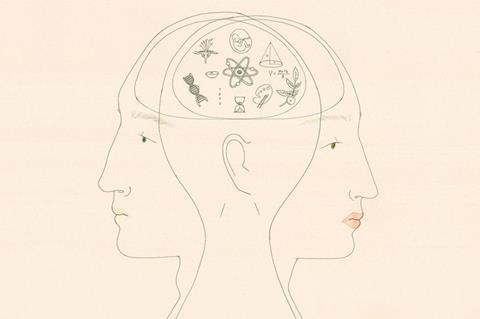
On the one hand, there are structural and anatomical differences between male and female brains. One meta-analysis found, for example, that male brains are about 12 per cent larger in volume than those of females, and that male brains have higher tissue densities in the left amygdala and the hippocampus than female brains.
But it is unclear whether differences are due to nature or nurture. For some, like Larry Cahill, a neurobiologist at the University of California at Irvine, the evidence leans towards nature being dominant. “There are biologically based sex differences at all levels of mammalian brain function,” he says. On the other hand, a study of 1400 human brains found that they can’t be simply classified into male and female: each brain was a unique mosaic of features with no gender specificity.
We still try to modernise the patriarchy rather than overthrow it
And culture undoubtedly plays a role in shaping our brains and behaviour. To illustrate how childhood events can mould us, Shannon Davis of George Mason University in Virginia and Barbara Risman at the University of Illinois at Chicago analysed 50 years of data collected by the Child Health and Development Studies in California. This comprised information from nearly 15,000 families, on everything from mothers’ hormone levels during pregnancy to childhood memories and the children’s behaviour as adults.
The analysis showed that prenatal hormone levels, including testosterone, had some influence on whether people regarded themselves as masculine or feminine as adults. But childhood experiences – having to physically defend themselves, being asked to wear dresses, playing with dolls – were the strongest predictors of gender identity.
Davis and Risman say early testosterone levels may shape bodies so that women are more or less easily shoehorned into female stereotypes. “Bodies themselves may trigger socialisation that sticks,” they wrote.
Boys will be boys
And so stereotypes persist. In 2007, a study of 80 children who were 3 or 4 years old showed that fathers tend to be more concerned about their daughter’s risk-taking behaviour than about their son’s. Children may internalise their parent’s worries. A study of 3-year-olds found that boys thought their fathers tolerated behaviour that could lead to injury and girls thought they would protect them from the consequences. This suggests girls may learn to expect that others think they are more prone to injury than boys, say the researchers: “It is quite possible that [they] internalise this sense of vulnerability.”
The cultural amplification of small biological differences results in a huge gap between how men and women think of themselves. For Lise Eliot at the Rosalind Franklin University in Chicago, this divergence is partly due to our innate need to categorise, which leads to stereotypes. When young children start categorising, it splits boys from girls. “Kids are a big generator of their own divergence. Once boys and girls figure out they are boys or girls, they become motivated to live up to the stereotypes,” says Eliot.
We may never fully pull apart the extent to which gender differences are biological or cultural, but many of our stereotypes are just that – cultural creations that have become the touchstones for justifying patriarchy. And the research suggests that if we want to change this status quo, we need to start challenging received ideas from the earliest stages of childhood.





























No comments yet