















All Research articles – Page 3
-
 Research
Big problems with little particles?
Nanomaterials have been on the scene for more than 15 years and they are being applied in a variety of sectors including coatings, textiles, energy, security, IT, food, cosmetics and medicine. They have unique properties compared to their larger counterparts such as the ability to squeeze into spaces inaccessible to larger particles. But with the research still in its infancy, their long-term effects on human health and the environment remain poorly understood.
-
 Research
Lawrencium experiment could shake up periodic table
Lawrencium’s position on the periodic table may now be up for debate after scientists in Japan successfully measured the first ionisation potential of the synthetic f-block element. The result may provide fuel for arguments that lawrencium and its close cousin, lutetium, should be considered part of the central d-block.
-
 Research
How Hollywood portrays the real physics of espionage
MI6’s gadgetmaster, known only as Q, and his innovative gizmos have long been a staple of the Bond series. Rocket belts, lasers hidden in wristwatches, and stun-guns concealed in mobile phones have been used to help 007 out of some tight spots when on Her Majesty’s secret service. Many of ...
-
 Research
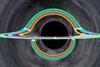
Interstellar technology throws light on spinning black holes
The team responsible for the Oscar-nominated visual effects at the centre of Christopher Nolan’s epic, Interstellar, have turned science fiction into science fact by providing new insights into the powerful effects of black holes.
-
 Research
Laser “ruler” technique holds promise for hunting exoplanets
The hunt for Earth-like planets around distant stars could soon become a lot easier thanks to a technique developed by researchers in Germany.
-
 Research
A decade of smoking cessation in Europe
The continent with the worst smoking habit is gradually giving it up. A range of anti-smoking policies and new cessation products has led to reduced rates of smoking in most countries, which will eventually impact on smoking-related deaths.
-
 Research
Pharmaceuticals in the environment: a growing problem
Drugs taken by humans and animals find their way into rivers, lakes and even drinking water, and can have devastating effects on the environment.
-
Research
Clean investing: why do it?
the business case for being natural resource and environmentally savvy
-
 Research
The great Chinese takeaway - Chinese companies invest in overseas assets
Over the past five years, China’s three National Oil Companies - China National Petroleum Company (CNPC), Sinopec and China National Offshore Oil Company (CNOOC) - have invested somewhere between $80 billion and $100 billion in oil and gass assets overseas (at least $40 billion of that in North America).
-
Research
Measles cases in Wales approaching 700 mark
Measles cases continue to be reported across Wales, which is facing an outbreak of the infection with the majority of cases in the Abertawe Bro Morgannwg, Powys and Hywel Dda Health Board areas.Public Health Wales revealed yesterday (11 April 2013) that 693 cases have so far been reported in the ...
-
 Research
Amazing facts about the Square Kilometre Array
Did you know the SKA will be so sensitive that it will be able to detect an airport radar on a planet 50 light years away?
-
 Research
Nature: DNA anniversary — still fabulous at sixty
Sixty years ago, Nature published the structure of DNA. Rachel Airley and Sophie Khatib look at attitudes at the time and ponder how the discovery led the way for “omic” sciences
-
Research
DNA
After the acquittal of Amanda Knox and Raffaele Sollecito, we look at how physics underpinned the discovery of the structure of DNA.Knox and Sollecito were acquitted of the murder of British student Meredith Kercher on appeal, after the DNA evidence on which they were convicted was deemed to be unreliable.Although ...
-
Research
Galaxy evolution, cosmology and dark energy
How do galaxies evolve and what is dark energy?
-
Research
What is radio astronomy?
Astronomers use radio telescopes to explore the universe by detecting electromagnetic radiation emitted by objects in space.Radio wave receptors, or antennas, detect the relatively long wavelength (low frequency) radio waves that penetrate the Earth’s atmosphere. These radio signals have frequencies between about 30 MHz and 40 GHz, which is equivalent ...
- Previous Page
- Page1
- Page2
- Page3
- Next Page