Sixty years ago, Nature published the structure of DNA. Rachel Airley and Sophie Khatib look at attitudes at the time and ponder how the discovery led the way for “omic” sciences
Mount athos path
Source: REUTERS/Yannis Behrakis
A Greek Orthodox monk walks on a foot bridge leading to Saint Nicolas Orthodox church in order to contuct the first mass of the year in Vistonida lake at Porto Lagos in northern Greece, Jan. 1, 2011. The church is part of the
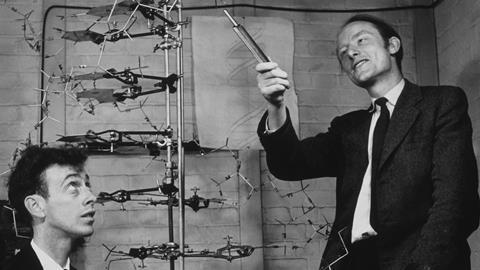
On 25 April 2013, it will be 60 years to the day since the publication, in Nature, of the crystal structure of DNA.1 Since then, this intertwining of two helices has become an iconic symbol of one of biology’s most inspirational discoveries. The simple, subtle elegance of the double helix is reflected by the unassuming way the riddle of its existence was announced by the authors of the paper, James Watson and Francis Crick, who wrote: “We wish to suggest a structure for the salt of deoxyribose nucleic acid (DNA). This structure has novel features which are of considerable biological interest.”
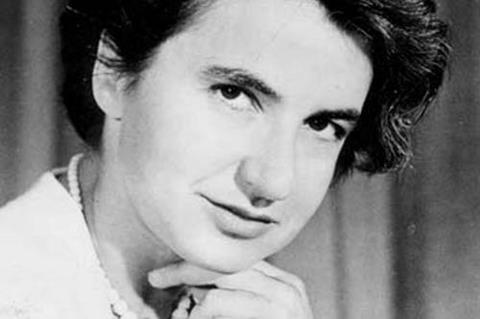
Rosalind Franklin is currently being portrayed on the London stage by Nichole Kidman
This almost shy start to a paper that was only one page long depicted little of the drama. The political jostling and the prevailing attitudes at the time towards women scientists in particular meant that little credit was given to Watson and Crick’s colleague and biophysicist Rosalind Franklin, who provided the data that proved to be the Eureka moment in the solving of the double helix.
Initially, Linus Pauling had put forward an “inside-out” version consisting of a triple helix with bases on the outside, curving round the phosphate backbone running through the centre. DNA was known to have a crystal structure.
In X-ray crystallography, when X-rays hit the electron clouds of a substance they scatter. Once this has been completed, the sample is rotated to determine an accurate and reproducible three-dimensional structure. A key piece of data produced by Dr Franklin, “photo 51”, which depicted the defining “x” image (pictured right), was the result of a complex and multifactorial procedure.2
Dr Franklin’s expertise and enthusiasm, in addition to her experience working with DNA, meant that she had the unique skill set to produce these ground-breaking photographs. The story transpires that this image allowed Watson and Crick to visualise the structure of DNA using cardboard “puzzle pieces”.3
In a sad twist of events Dr Franklin did not live to observe the profound effect her work would have on the world of physiology and medicine: she succumbed to ovarian cancer four years after the paper was published. Although Maurice Wilkins, who had collaborated with her on the crystallography work and reportedly shown Watson and Crick the data without her consent, joined them on the podium when they were awarded a Nobel Prize in 1962, awards could not be given posthumously.4
Genes were seen as the “secret of life”, and at that point scientists had had their appetite for them whetted by the work of Gregor Mendel, who came up with a plausible mechanism for the mathematics of inheritance.
Another factor had been the birth of cytogenetics, notably the work of Barbara McClintock and colleagues on maize. Today, cytogenetics is a clinical science discipline used for diagnosis of genetic and chromosomal disorders. Back then, however, it was the basic science that revealed chromosomes as the carrier of genetic material.
The roots and fruit of the DNA double helix. Information was sourced from The Wellcome Library digitised archive “Codebreakers: makers of modern genetics” at www.wellcomelibrary.org (download PDF)
Jumping genes
Later, McClintock’s work would reveal the part played by “jumping genes” or transposons in genetic variation and the formation of mutations and genetic polymorphisms. This would give rise to the modern transfection and cloning methodology which is now used routinely in molecular biology laboratories to increase our understanding of the role of these changes in the development of disease and our individual response to medicines.
The solving of the double helix and the cracking of the DNA code by Nirenberg, Khorana and Holley in 1961 might be described as the Pillars of Hercules of modern molecular biology, guarding the ocean of scientific riches that were to be discovered subsequently.
The 1970s and ’80s were the “generation X” when it came to advances in the science of genes, with the development of two significant methodological techniques that would allow us to investigate the functional consequences of genes. These techniques, the polymerase chain reaction (PCR) and DNA sequencing, have allowed us to determine how, why and when genes are transcribed, their place in normal physiology and the consequences of their over- and under-expression in the development and progression of disease.
PCR, as a means of amplifying mere slithers of DNA to workable concentrations, has had a profound effect on the field of forensic science. This ingenious technique, which recapitulates endogenous mechanisms of DNA replication and polymerisation in controlled laboratory conditions, has also allowed us to pinpoint and generate specific regions of gene sequences, quantify them and determine the functional role of the protein they encode. Together with DNA sequencing, a method perfected by Frederick Sanger, PCR has allowed us to unravel many of the mysteries wrapped up in cells and their internal and external controls. Having surpassed generation X, we are now seeing a “millennial generation” of DNA biology, reinvigorated by high throughput analytical technology that allows the simultaneous exploration of thousands of genes and their up and downstream biological interactions.
Predictions of “lab on a chip” bench science have become a reality, those crucial controlled DNA hybridisation techniques delivered by PCR and DNA sequencing being modified and manipulated to enable us to determine the function of any permutation of DNA sequence we desire. Having broken through the boundaries presented by the need to determine which genes encode which proteins, we are now also able to determine how these genes are switched on and off by regulatory DNA sequences.
The DNA dogma — that DNA goes to RNA goes to protein — after being cemented into biology by the cracking of the DNA code in the 1960s, has also been put on trial with our rapidly increasing knowledge of non-coding RNAs, which may not see the light of day where proteins are concerned, but are critical in the fine-tuning of our genetics. The resounding effect of the Human Genome Project and the many spin offs created since, such as the Cancer Genome Project, have given us genomics, proteomics, transcriptomics, metabolomics and many more “omic” sciences, which are allowing us to carry out science wholesale, to give us a “freakogenomic” explosion of precise and specific drug targets and predictive biomarkers. These are helping us to diagnose earlier, monitor drug therapy and take apart the causes of diseases that have previously eluded us.
This has interesting implications for medicines optimisation. For instance, work led by Mike Stratton at the Sanger Institute allows us to link a wide range of genes with sensitivity to anticancer agents. To demonstrate the capability this gives us as pharmacists, a searchable database is now available (www.cancerrxgene.org).
Accepted wisdom
Until recently, the accepted wisdom was that only around 2 per cent of the genome was made up of functional gene exons and corresponding promoter sequences or the molecular switch that tends to be found adjacent to the coding gene. The rest consists of long ribbons of intronic or “junk” DNA. This is cut out during the transcription process and had been largely dismissed as inconsequential by molecular biologists.
The discovery of non-coding RNAs has awakened an interest in what is now described as DNA dark matter, a cosmology term analogous to the invisible matter that makes up most of the universe. There is now a persuasive school of thought that among this junk DNA lies the solution to the many mysteries yet to be solved to fully understand our genes.
Large scale endeavours such as the ENCODE (Encyclopedia of DNA Elements) project, an international consortium funded by the US National Human Genome Research Institute, have given us the new field of proteogenomics.5 At the same time, our increased understanding of epigenetics is allowing us to determine how DNA processing, such as methylation, which is external to the DNA code and reactive to the environment, is transferable to subsequent generations. So, just as we construct mighty towers of biological information, accepted theories tumble and we finally get to answer that 64,000 dollar question about nature versus nurture.6
Happy anniversary, DNA, from the pharmacy profession. You are still fabulous at 60!
Rachel Airley, PhD, MRPharmS, is senior lecturer in pharmacology and Sophie Khatib is a final-year pharmacy student at the University of Huddersfield and student blogger for PJ Online (correspondence to email r.airley@hud.ac.uk)
Postscript
1 Watson J.D. and Crick F.H.C. (1953) A Structure for Deoxyribose Nucleic Acid. Nature 171, 737-738 2 Franklin RE, Gosling RG (1953) Molecular Configuration in Sodium Thymonucleate. Nature 171,740-741 3 Pray, L. (2008) Discovery of DNA structure and function: Watson and Crick. Nature education. 1(1). 4 Arnott S. (2006) Historical Article: DNA polymorphism and the early history of the double helix. Trends Biochem Sci. 31: 5 The Encode Project Consortium (2012) An integrated encyclopedia of DNA elements in the human genome. Nature 489,57–74 6 Vardhman K. Rakyan, Thomas A. Down, David J. Balding & Stephan Beck. (2011) Epigenome-wide association studies for common human diseases. Nature Reviews Genetics 12, 529-541.
After the acquittal of Amanda Knox and Raffaele Sollecito, we look at how physics underpinned the discovery of the structure of DNA.Knox and Sollecito were acquitted of the murder of British student Meredith Kercher on appeal, after the DNA evidence on which they were convicted was deemed to be unreliable.Although ...
The complex politics of global warming results from numerous cofactors arising from the global economy’s dependence on carbon dioxide emitting fossil fuels; and because greenhouse gases such as CO methane and N2O (mostly from agriculture) cause global warming.
The makers of the children’s book The Gruffalo have drawn their characters practising social distancing to help children understand the regulations. Author Julia Donaldson and illustrator Axel Scheffler created the panels as a “light-hearted” way of spreading the message. They feature The Gruffalo, Stickman and The Smeds and The Smoos ...























No comments yet