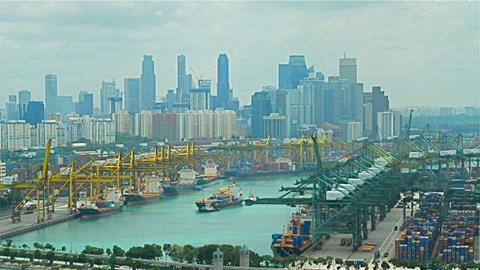
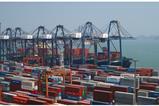
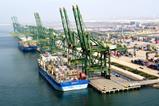
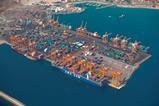
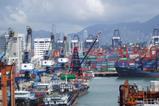
Singapore saw average growth last year with a 3 per cent increase in volumes that raised its throughput to 32.5 million teu. However, with current capacity estimated to be at 35 million teu, it is now putting plans together for its long-term development.
This centres around the reclamation of land in its Tuas area, across the Singapore Strait from its nearest competitor in Malaysia, the Port of Tanjung Pelepas. The Singapore Government has allocated some US$8 billion to develop the area, which will see capacity taken to an extraordinary 65 million teu per year and will effectively future-proof the port for several generations. Construction is expected to begin some time around 2022.
In the nearer term, development of the third and fourth phases of its Pasir Panjang terminals is under way. At a cost of US$2.8 billion, the facility will offer carriers 15 deepsea berths across 6km of quayline with a depth alongside of 18m.
At the same time, it is investing substantially in the development of automated container handling technology to increase productivity and thus capacity. This year it reaffirmed its partnership with the Maritime and Port Authority of Singapore to develop new port automation, intelligent planning and control systems, and green port solutions.