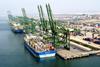
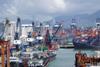
Throughput 2013: 17,680,000 teu – up 3.72 per cent on 2012 (17,046,000 teu)
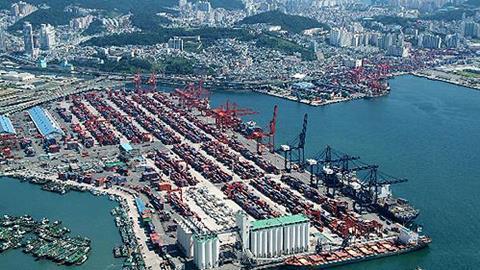
South Korea’s largest port remains a major entrepôt for the Bohai Bay area of China, where carriers can interchange goods coming out of China and bound for Europe and the USA, as well as the not-insignificant export volumes coming out of South Korea and Japan. And the port also benefits from the Chinese Government’s ban on foreign carriers operating domestic cabotage services between Chinese ports (Container Shipping & Trade 1st Quarter 2014).
“We honestly believe that it would benefit Chinese ports if they relaxed this law and allowed us to carry out our own transshipment. We are forced to go to Busan as we cannot use Chinese ports for international relay,” Maersk Line’s Asia-Pacific head Tim Smith told Container Shipping & Trade.
Pusan fell just short of its stated 18 million teu volume target but remains on track to have some 55 per cent of its throughput as transshipment traffic, as its sets out to cement its position as the major container logistics provider in the region.
In addition, last year it expanded the navigation channel into the port. This is expected to substantially reduce vessel turn-around times.