Increasingly wedded to USA, DT vision shifts from being “Leading European Telco” to “Leading Telco”.
Operational hangovers from last cycle add pressure; glaring misses on mega-projects and PANNET and BSS revamps rebooted.
Deutsche Telekom’s (DT) Capital Markets Day saw a bullish Group leadership team renew aggressive cost-cutting and capital spend ambitions as it addresses prospects for the early-2020s, and beyond.
Both existing partners of DT, and challenger vendors targeting opportunities with the operator, will have had plenty to chew on as Group Chief Executive (CEO) Timotheus Höttges and his key lieutenants laid out yet more “transformation” plans for their respective lines of business (see separate reports).
In key markets (i.e. mainly Germany and the USA), Höttges confirmed earlier hints that he is to keep the capital expenditure (capex) throttle pressed firmly down, and maintain the spend aggression that has characterised DT’s approach since his first Capital Markets Day as CEO, in February 2015 (Deutsche Telekomwatch).
As it enters another mid-term cycle, to 31 December 2021 (FY18–FY21), DT indicated that the marked capex increases (averaging around 6% annually) seen in recent years will not be maintained. However, the operator appears set to keep the spend flowing, with “stable” capex envisaged across the new cycle. This does not include the USA, where capex needs are likely to rise significantly — or any spectrum purchases on either side of the Atlantic (again, likely to be considerable).
Under-the-hood, meanwhile, all Europe-based segments have been mandated to contribute to new operating expenditure (opex) reduction ambitions, in order to help fuel those perceived growth engines. This message came neatly wrapped within DT’s new, Save for Growth Investments strategic axiom, and saw Höttges repeat his newly-favoured “all hands on deck” call-to-action to DT’s employees and other stakeholders — including, no doubt, its supply chain (Deutsche Telekomwatch).
Gas productivity figures
| Year: | GDP (%) | IPI (%) | Gas Market (%) |
|---|
| 2000 |
25.3 |
7.8 |
6.6 |
| 2001 |
-0.5 |
-1.7 |
-1.5 |
| 2002 |
6.2 |
-6.6 |
-15.1 |
| 2003 |
13.2 |
13.6 |
1.4 |
| 2004 |
18.8 |
3.9 |
32.5 |
| 2005 |
22.1 |
5.3 |
19.5 |
| 2006 |
22.9 |
5.1 |
10.6 |
| 2007 |
16.1 |
-2.9 |
30.9 |
| 2008 |
22.3 |
1.9 |
19.3 |
| 2009 |
-19.6 |
-10.5 |
3.1 |
| 2010 |
12.8 |
2.8 |
8.7 |
| 2011 |
21.4 |
14.8 |
115.2 |
| 2012 |
7.4 |
3.9 |
-1 |
| 2013 |
3.6 |
3.3 |
6.3 |
| 2014 |
3.1 |
3.4 |
-2.4 |
| 2015 |
-15.1 |
2.3 |
-9.8 |
Predictably, considering ongoing trends in the industry and global economy, there was no signal of a loosening of DT’s emphasis on Germany and the USA for opportunity, expansion, and investment. If anything, the tone of the event was much more USA-friendly than the last Capital Markets Day in 2015, when DT appeared not quite ready to acknowledge its reliance on T-Mobile US’ (TMUS) resurgence.
With the proposed Sprint merger, DT is now actively embracing this dependence and tying future prospects to the scaled-up TMUS’ perceived cash flow potential, as well as being prepared to encounter some pain while Sprint and TMUS come together (Deutsche Telekomwatch). This chimed with Höttges’ recent references to DT’s “Trans-Atlantic Platform”, and contrasts with previous assertions of the operator’s place as the “Leading European Telco” (Deutsche Telekomwatch).
TMUS still cousin rather than sibling
Although Group leadership acknowledged its massive bet on US growth, and adoption of a more cross-Atlantic platform in general, there were only tentative signs of closer collaboration between TMUS and Europe-based businesses. Höttges indicated that TMUS’ approach to giving customer service functions their own P&L responsibility would be assimilated elsewhere within DT. Telekom Romania, meanwhile, was said to be adopting the American NatCo’s disruptive Un-Carrier commercial strategy as it seeks to revive performance. Yet these in-Group initiatives still appear piecemeal, and it remains noticeable that TMUS executives have no obvious formal vehicle for input into matters on DT’s side of the Atlantic, such as via NatCo or function boards or committees. This may well be down to TMUS, as much as DT, with John Legere, CEO of TMUS, not attending the Capital Markets Day.
Onboarding completed; Höttges has new squad in place for new cycle
The central Capital Markets Day theme was re-commitment to an “entrepreneurial” DT that is willing to take (multibillion-dollar) risks. As well as in spend plans, this was reflected in the new faces within the event’s executive line-up.
Höttges has made significant changes to DT’s Board of Management in the last two years, through both internal and external hires (Deutsche Telekomwatch, and passim) — and the fresh leadership group looks not only more expansive and diverse, but also much readier to align with the CEO’s Grand Vision.
New faces came on stage to present how the new FY17–FY21 strategy translates for Europe (Srini Gopalan), Germany (Dirk Wössner), Group Development (Thorsten Langheim), and Systems Solutions (Adel Al-Saleh) — while TMUS President & Chief Operating Officer Mike Sievert and Chief Technology Officer Neville Ray flew over to espouse the American plan, in place of the absent Legere.
Incoming DT Chief Financial Officer (CFO) Christian Illek had a brief and slightly awkward cameo, too, standing alongside incumbent CFO Thomas Dannenfeldt.
Illek made the absolute most of this short appearance, stressing his eagerness to make a big impact on costs. It was clear how Illek’s previous Human Resources beat ties with his efficiency ambitions as CFO (more than half of DT’s planned €1.5bn in opex reduction relates to internal or external workforce costs), and he gave a thinly veiled warning to suppliers that he is planning to “put his fingers” into the effectiveness of DT spend on “existing platforms and systems”.
In many ways, this echoed Dannenfeldt’s bold, interventionist presentation in 2015, and it will be interesting to see whether Illek is more successful in breaking down internal barriers to efficiency within DT’s sprawling organisation.
Tiger Tim
Wrapping up with a rousing, impassioned finale, Höttges expressed strong belief in the refreshed make-up of the DT Board of Management.
“Leading comes from leading. If you want to be the leading telco, you have to do things that others don’t do… you have to behave entrepreneurially, and this is the aspiration of this team. This is what we are trying to do.” – Höttges
The CEO — apparently channelling a new ‘inner Legere’ — went on to castigate those attending (and others watching from DT offices or rival headquarters) for viewing prospects “conservatively”.
They were demonstrating a “confirmation bias” by regarding industry growth as a thing of the past, he thundered.
“It [would be] very easy to manage this company without any risks. Just move on, don’t do things differently. There is no need to ‘do Sprint’. We have a great asset in the USA and it will perform — at least until the end of my tenure. So I [could] easily, bureaucratically, administer this business. There is no need to do this. But if you want to create value beyond what everyone else is doing, you have to take risks… ” – Höttges
Technology & Innovation
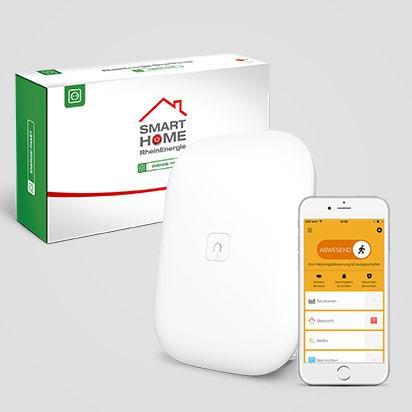
Deutsche Telekom’s (DT) white-label smart-home platform is being launched by several energy companies in Norway’s consumer market. The move concerns Nettalliansen, a consortium of 47 energy providers and utilities that struck a deal to adopt DT’s White Label Smart Home portfolio in February 2017 (Deutsche Telekomwatch), and is offering home assistance systems via a venture called “Hitch”. The services, which are said to have been adapted for the Norwegian market, are being supplied directly by the consortium and 15 partner energy companies, which are said to have a collective customer base of around 150,000 homes in the country. Espen Hansen, Chief Executive of Hitch, asserted that rival smart-home solutions from players such as Amazon, Apple, and Google “lack national adaptation”. DT’s White Label Smart Home portfolio consists of the flagship QIVICON smart-home platform, as well as accompanying apps, gateways, and third-party devices from brands including Miele, Philips, and Sonos. DT said it has now been rolled out by partners in seven European countries, including: Bitron Video in Italy; Cosmote Greece (via its Cosmote Smart Home offer); eww-Gruppe in Austria; KPN in the Netherlands; Slovak Telekom (with the Magenta SmartHome offering), in addition to Telekom Deutschland and utility Vattenfall in Germany and the Nettalliansen consortium in Norway (Deutsche Telekomwatch, passim).






















No comments yet