With wildfires on the rise, endangered koalas are more threatened than ever, but a new treatment for burned animals offers a ray of hope. We go inside the world’s only koala hospital
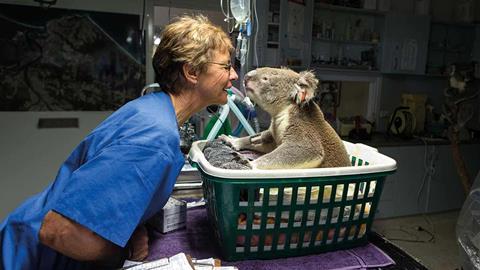
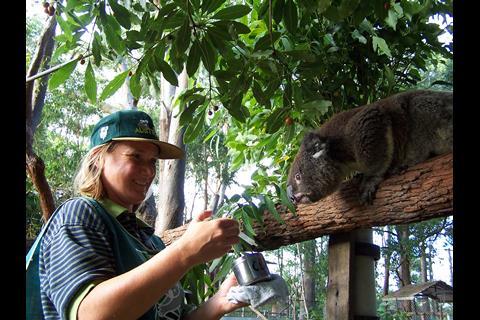
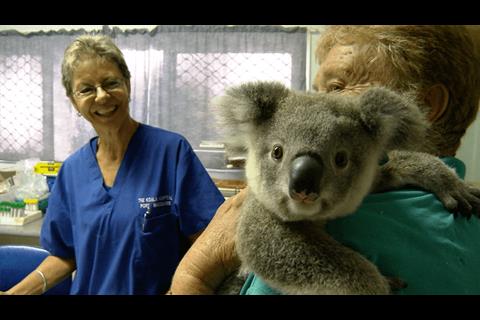
EVEN for rehab, this is no ordinary hospital. For a start, most of the staff are volunteers. One of them, Sharyn Brown, shows me around the wards – shady, quiet enclosures dotted with gum trees, in which the patients sit. Whiteboards record their progress and requirements. “No melaleuca leaves,” one sign reads. Brown tells me that the hospital employs a “leaf searcher”, who scours the local forests to find foliage for dinner time. “This one,” she explains, pointing to a patient, “came from a part of the state where melaleuca doesn’t grow, so it would make him sick.”
Welcome to Port Macquarie Koala Hospital in New South Wales. This unique facility treats around 250 animals each year from across Australia. Some have been hit by cars or attacked by dogs, others have fallen prey to a variety of illnesses, but perhaps the most troubling group are those with serious burns. With wildfires on the increase in the country, burns have become a serious and growing concern for the staff here. Now, however, a new discovery has led to a surprising treatment regime that includes koala faeces, or “poo shakes” as they are affectionately known.
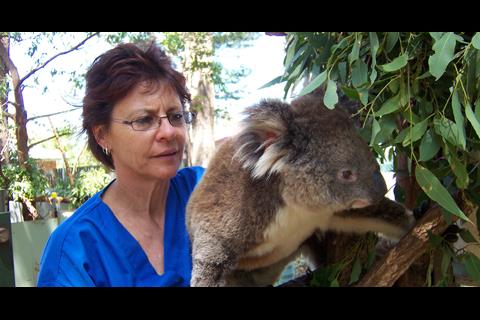
“Koalas are pretty chilled and good to work with because they usually let you help them,” says Cheyne Flanagan, clinical director at the hospital. When she started working here 30 years ago, it was just a job, she tells me, but she has grown to love these marsupials. She has also become aware of their idiosyncrasies. “Koalas confound the textbooks. They just don’t react to treatment in the ways you would expect,” she says. “They’re fascinating and puzzling from a clinical viewpoint.”
Much of the problem is connected to their diet. Eucalyptus leaves contain various toxic chemicals, so the koala’s liver has evolved to rapidly break these down before they do any harm. As a result, it also processes pharmaceutical drugs very efficiently. This makes treating burned koalas a big challenge: the antibiotics and painkillers they are usually given can have little effect. What’s more, koalas caught up in wildfires are often too traumatised to cope with surgery, so can’t have skin grafts. Yet successful rehabilitation depends on repairing damage to burned paws, because without at least two healthy claws, a koala can’t climb. And if it can’t climb, it can’t survive in the wild. However, Flanagan and her team have now discovered a way around these difficulties.
“Koalas are pretty chilled and good to work with because they usually let you help them”
In 2017, a devastating wildfire ripped through Limeburners Creek, 20 kilometres north of Port Macquarie. Koalas were known to live in the forest, so, once the blaze had subsided, Flanagan and 12 volunteers went in search of survivors. “It was deadly quiet and the whole forest was covered in white ash,” says Flanagan. The team spread out in a line to comb the area, aware that time was of the essence. “It’s the radiant heat that is often the most damaging after a fire. It cooks the poor animals, sometimes for days. It’s like a microwave, burning through the skin and melting the keratin in the koala’s fur,” she says.
Koala rescue attendances
2011
2012
2013
2014
2015
2016
2017
2018
TOTAL
1311
1659
1416
1211
887
763
459
225
Sightings
988
1296
1140
965
652
539
272
135
Sick
144
143
122
128
115
143
131
64
Other
43
68
57
42
27
14
Hit By Car
105
115
72
60
76
58
48
21
Dog Attack
31
37
25
16
17
9
8
5
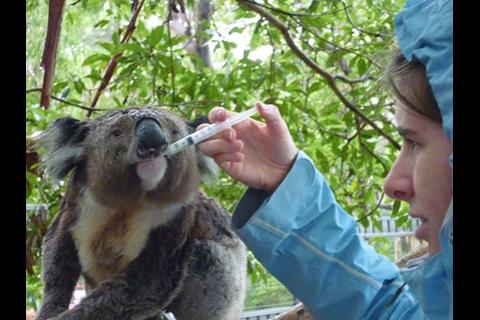
The rescue party managed to find eight animals in good enough condition to bring back to the hospital. “The trouble was, the koalas were just petrified,” says Flanagan. “So we decided not to take them into surgery – they were too stressed.” Instead, they were simply housed in separate enclosures with plenty of water and fresh eucalyptus leaves. Drugs were kept to a bare minimum. However, the two youngest koalas were fed with the facility’s special poo shake concoction.
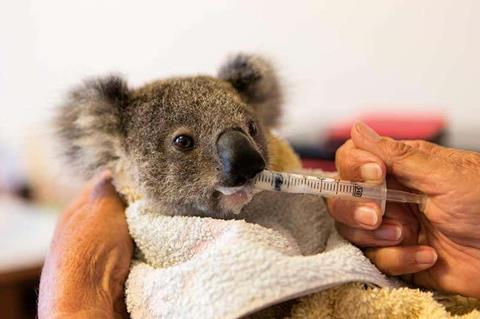
This treatment was inspired by something koalas do in the wild. For about a month while a joey is being weaned, at 6 months old, it consumes pap – a watery mixture of partly digested food and bacteria produced in part of its mother’s gut called the caecum. This boosts the joey’s gut microbiome, helping it fight infection and digest toxic gum tree leaves. Flanagan’s team feed orphaned joeys pap or, if that’s not available, regular faeces, and they did the same with the two infant koalas rescued after the Limeburners Creek fire.
Koala heal thyself
Within weeks, all eight injured animals had started putting on weight. Their claws and nail beds were healing too. “It was mind-boggling,” says Flanagan. “They healed themselves just by being left alone.” In fact, their recovery was faster than seen in koalas who have surgery. She believes that timing was crucial. Burned koalas appear to have what she calls a “golden three months”. Burns need to be cooled quickly, and any infection needs to be brought under control – she compares it to the “golden hour” for humans who have been burned. The revelation was that a bit of pampering and a healthy gut are enough to do the trick.
Source: Suzi Eszterhas/Minden Pictures
The best medicine for some koala patients is just rest and a lot of pampering
These findings are not yet published, but they are already making waves. “Poo shakes are controversial among researchers,” says Flanagan. Some think that they risk transmitting infections, and others see them as a rather unpleasant waste of time. However, support for the idea is bolstered by the growing realisation that the gut microbiome plays a vital role in health and disease, and can be manipulated using faecal transplants. In fact, Michaela Blyton at Western Sydney University is so enthusiastic about the potential of this approach that she wants to extend it to adult koalas. She has just finished a trial of “crapsules”: pills of fresh faeces designed to break down when they reach the small intestine, so that the bacteria they contain are not damaged by stomach acid.
Thinking even bigger, Flanagan believes that her team’s findings could have human applications. As with koalas, if someone is burned and subsequently infected, they can develop sepsis: severe systemic inflammation that can lead to organ failure. Worldwide, sepsis is a major cause of death for people with severe burns. One idea that is being explored by the National Institutes of Health in the US is to reduce this risk by administering the equivalent of a poo shake. Another possibility is using the approach to help people who, like koalas, don’t respond to medication, and people with liver disease who can’t tolerate drugs.
If lessons learned from treating koalas can save human lives, this could be a win-win. Claims that koalas are “functionally extinct” may be premature, but according to conservation charity WWF, they will be extinct in the wild within the next 40 years if habitat destruction continues at the current rate. Perhaps governments will protect them if they can help medical research, says Flanagan. “I don’t give up. My dedicated team of volunteers, and the koalas, keep me going despite huge challenges.”
10 facts about koalas
1) Koalas are found in the eucalyptus forests of eastern Australia. They have grey fur with a cream-coloured chest, and strong, clawed feet, perfect for living in the branches of trees!
2) Cuddly critters, koalas measure about 60cm to 85cm long, and weigh about 14kg.
3) Although you may have heard people call them koala ‘bears’, these awesome animals aren’t bears at all – they are in fact marsupials. A group of mammals, most marsupials have pouches where their newborns develop.
4) When an infant koala – called a joey – is born, it immediately climbs up to its mother’s pouch. Blind and earless, a joey uses its strong sense of touch and smell, as well as natural instinct, to find its way.
5) A joey grows and develops in the pouch for about six months. Once strong enough, the youngster rides around on its mother’s back for a further six months, only using the pouch to feed.
6) Koala’s grow up to become big eaters, shifting up to one kilogram of eucalyptus leaves in a day! They are fussy, too, and will select the most nutritious and tastiest leaves from the trees where they live.
7) These magnificent mammals get their name form an Aboriginal* term meaning, ‘no drink’. It’s believed this is because koalas get almost all their moisture from the leaves they eat, and rarely drink water.
8) But check this out – eucalyptus leaves are super tough and poisonous! Luckily for koalas, they have a long digestive organ called a cecum which allows them to break down the leaves unharmed.
9) Enjoy having a snooze? Well so do our furry friends! Koalas don’t have much energy and, when not feasting on leaves, they spend their time dozing in the branches. Believe it or not, they can sleep for up to 18 hours a day!
10) Although these beautiful creatures are protected by law, and not classed as an endangered species, their habitat is under threat. Sadly, around 80% of koala habitat has been lost to human homes, drought and forest fires.
The complex politics of global warming results from numerous cofactors arising from the global economy’s dependence on carbon dioxide emitting fossil fuels; and because greenhouse gases such as CO methane and N2O (mostly from agriculture) cause global warming.
The makers of the children’s book The Gruffalo have drawn their characters practising social distancing to help children understand the regulations. Author Julia Donaldson and illustrator Axel Scheffler created the panels as a “light-hearted” way of spreading the message. They feature The Gruffalo, Stickman and The Smeds and The Smoos ...























No comments yet