
















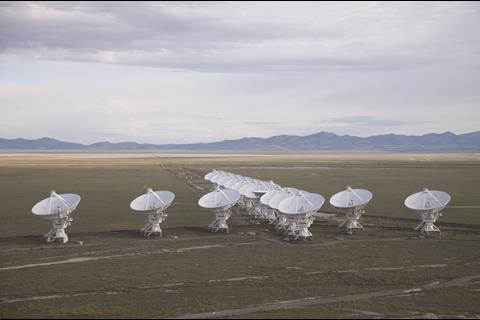
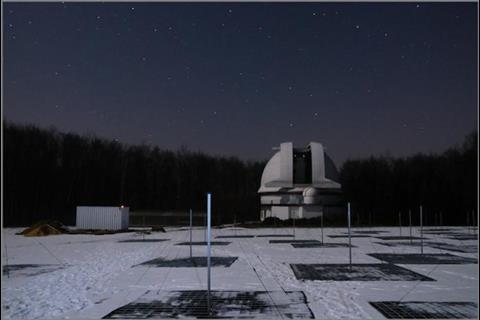
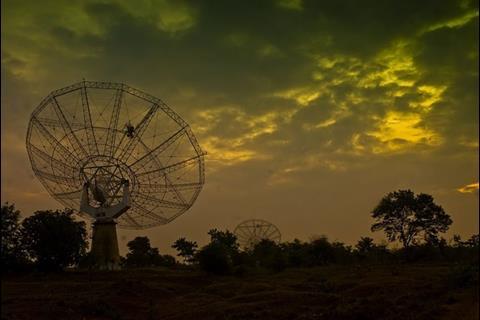
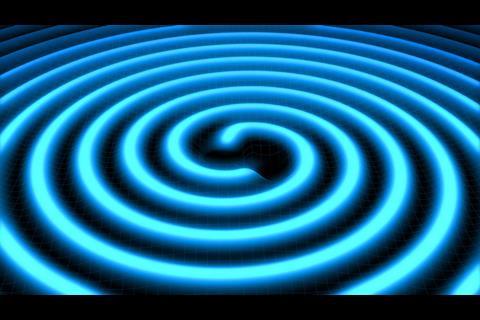
The €1.5bn (£1.2bn) SKA’s huge fields of antennas will sweep the sky for answers to the major outstanding questions in astronomy.
They will probe the early Universe, test Einstein’s theory of gravity and even search for alien intelligent life.
The project aims to produce a radio telescope with a combined collecting area of 1 million m2 - equivalent to about 200 football pitches.
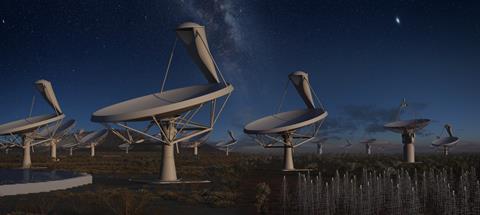
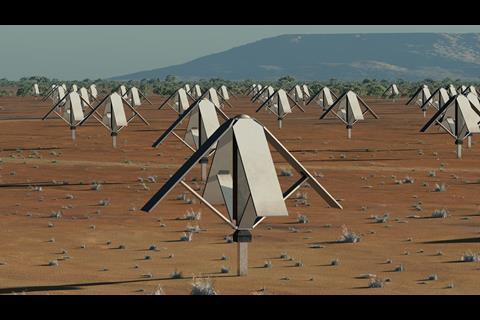
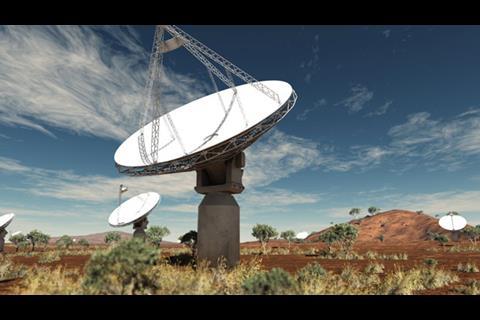
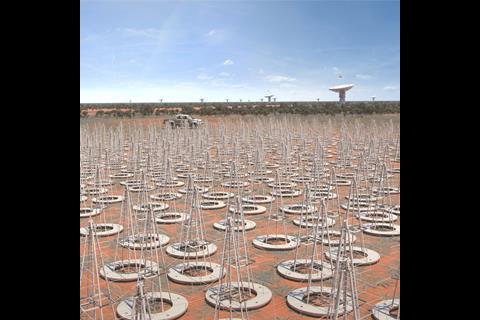
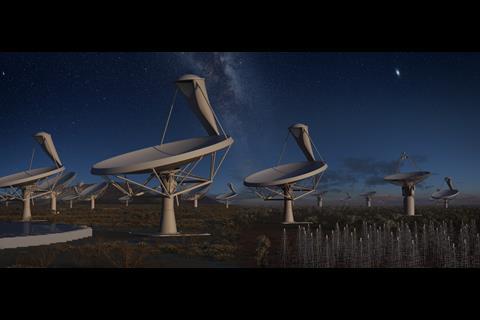
Thousands of linked radio wave receptors will be located in Australia and in Southern Africa. Combining the signals from the antennas in each region will create a telescope with a collecting area equivalent to a dish with an area of about one square kilometre.
Dual site approach
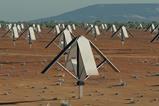
An array of dish receptors will extend into eight African countries from a central core region in the Karoo desert of South Africa. A further array of mid frequency aperture arrays will also be built in the Karoo. A smaller array of dish receptors and an array of low frequency aperture arrays will be located in the Murchison Radio-astronomy Observatory in Western Australia.
The SKA will generate enough raw data to fill 15m 64GB iPods every day!
SKA project Team
The Square Kilometre Array is a global science and engineering project led by the SKA Organisation, a not-for-profit company with its headquarters at Jodrell Bank Observatory, near Manchester, UK.
The SKA’s targets will be radio sources in the sky that radiate at centimetre to metre wavelengths.
These include the clouds of hydrogen gas in the infant universe that collapsed to form the very first stars and galaxies.
#SKAjobs We're recruiting an Alien Liaison Officer! Deadline today 23:59. Apply now or RT! https://t.co/IFDc7MwmYo pic.twitter.com/GZPAYXi8EU
— SquareKilometreArray (@SKA_telescope) 1 April 2016
The SKA will map precisely the positions of the nearest billion galaxies. The structure they trace on the cosmos should reveal new details about “dark energy”, the mysterious negative pressure that appears to be pushing the Universe apart at an ever-increasing speed.
The telescope will also detail the influence of magnetic fields on the development of stars and galaxies. And it will zoom in on pulsars, the dead stars that emit beams of radio waves that sweep across the Earth like super-accurate time signals.
Astronomers believe these dense objects may hold the key to a more complete theory of gravity than that proposed by Einstein.
Introducing the SKA
The SKA will see back to a time before the first stars lit up. Optical telescopes see the light from stars. Before stars existed there was only gas; a radio telescope with the sensitivity of the SKA can see back in time to the gas that existed before stars were even born.
The SKA will address a wide range of fundamental questions in physics, astrophysics, cosmology and astrobiology. It will be able to investigate previously unexplored parts of the distant Universe.
The project is led by the SKA Organization, a not-for-profit company with its headquarters at Jodrell Bank Observatory, near Manchester, UK. The organization was established in December 2011 to formalize relationships between the international partners and centralize the leadership of the project.
The SKA will be built in Southern Africa and Australia. There will be 3,000 dish antennas, each about 15m in diameter as well as two other types of radio wave receptor, know as low- and mid-frequency aperture array antennas. Construction of the SKA is expected to begin in 2016 and conclude in 2024.
The SKA key science projects
Five key science projects have been selected:
- How do galaxies evolve and what is dark energy?
The acceleration in the expansion of the Universe has been attributed to a mysterious dark energy. The SKA will investigate this expansion after the Big Bang by mapping the cosmic distribution of hydrogen.
- Was Einstein right about gravity?
The SKA will investigate the nature of gravity and challenge the theory of general relativity.
- What generates the giant magnetic fields in space?
The SKA will create three-dimensional maps of cosmic magnets to understand how they stabilise galaxies, influence the formation of stars and planets, and regulate solar and stellar activity.
- How were the first black holes and stars formed?
The SKA will look back to the Dark Ages, a time before the Universe lit up, to discover how the earliest black holes and stars were formed.
- Are we alone?
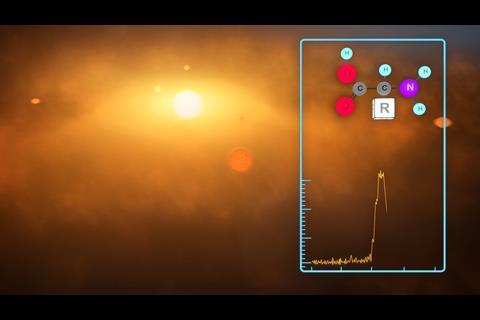
The SKA will be able to detect very weak extraterrestrial signals and will search for complex molecules, the building blocks of life, in space.
Downloads
SKA scientist engineers factsheet
PDF, Size 1.14 mb

Nicholas Kratzer (b. 1486/7, d. after 1550) was astronomer and astrologer to King Henry VIII.View full profile










No comments yet