

All radio telescope articles
-
 Features
China to build the biggest radio telescope
Nestling in a vast natural crater, China’s latest giant is about to come alive. A colossal, steeply curved dish glints in the sunlight, surrounded by jagged mountains that cut into the sky. Construction workers, busy putting the finishing touches to this structure, look tiny against the huge ...
-
 Features
Gallery story layout
The €1.5bn (£1.2bn) SKA’s huge fields of antennas will sweep the sky for answers to the major outstanding questions in astronomy.
-
 Features
Video story layout
The €1.5bn (£1.2bn) SKA’s huge fields of antennas will sweep the sky for answers to the major outstanding questions in astronomy.
-
 Features
Standard layout with picture byline
The €1.5bn (£1.2bn) SKA’s huge fields of antennas will sweep the sky for answers to the major outstanding questions in astronomy.
-
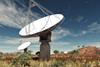 Features
Audio story layout
The €1.5bn (£1.2bn) SKA’s huge fields of antennas will sweep the sky for answers to the major outstanding questions in astronomy.
-
Research
Galaxy evolution, cosmology and dark energy
How do galaxies evolve and what is dark energy?
-
Research
What is radio astronomy?
Astronomers use radio telescopes to explore the universe by detecting electromagnetic radiation emitted by objects in space.Radio wave receptors, or antennas, detect the relatively long wavelength (low frequency) radio waves that penetrate the Earth’s atmosphere. These radio signals have frequencies between about 30 MHz and 40 GHz, which is equivalent ...