The most rational gambling tactic is to pick the bet with the greatest average reward — the one that nets the most if repeated millions of times. But even when this option is clear humans tend to gamble irrationally, fixating on worst case scenarios and being overly averse to loss.
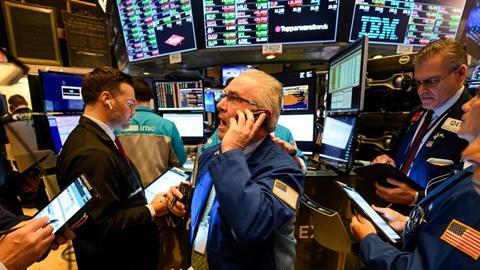
This irrationality, makes humans difficult to predict, affecting everything from our understanding of how traders bet on stocks to giving autonomous cars an understanding of risks humans take on the road.
So Joshua Peterson at Princeton University and colleagues trained an AI on 195,000 human gambling decisions in 10,400 different scenarios, gathered using the crowdsourcing platform Amazon Mechanical Turk. Participants chose between two options with varying monetary rewards and probabilities of winning.
The AI then predicted human decisions on 2600 additional scenarios. On a measure of how closely the predictions matched the actual human decisions, it scored 0.009, where 0 is complete overlap and 1 is no overlap.
This was 45 per cent better compared to the best attempts built using psychological models.
The approach could be applied to problems like forecasting online shopping behaviour or helping AI co-workers predict colleagues’ actions, says Peterson.
“Many of the most important human decision making phenomena are captured in our choices between gambles,” says Ori Plonsky, from Technion – Israel Institute of Technology. Better predictive models like this could help tackle policy challenges like how to steer people towards healthier life choices or regulate financial markets, he says.
Reference: arXiv, arxiv.org/abs/1905.09397


















No comments yet