











All Environment articles
View all items with this category.
-
 News
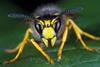
NewsWasps are shrinking in size and it may be because of climate change
Some black and yellow-striped picnic visitors might be smaller than their ancestors were a century ago. At least one common wasp species appears to be shrinking as a consequence of the ongoing global rise in temperatures caused by climate change.
-
 News
NewsFree-floating DNA to reveal the health of river and lake ecosystems
The mix of DNA floating in rivers and lakes will finally be used to monitor the state of aquatic ecosystems, after years of tests to show that the technique works.
-
 News
NewsRound-up: the key decisions to protect wildlife from the CITES summit
One of the world’s largest international wildlife trade summits wrapped up in Geneva yesterday, with some animals being awarded stronger protections. Here are the 7 key decisions that were made at a meeting of the Convention on International Trade in Endangered Species of Wild Fauna and Flora (CITES).
-
 News
NewsBananas have benefited from climate change – but they won’t in future
Climate change has been relatively kind to banana suppliers so far – but in the decades to come, friend may turn to foe. Temperatures are likely to get so hot that the annual production gains enjoyed by banana suppliers will begin to drop. And in some places, total banana yields ...
-
 News
NewsMicroplastics in the Arctic and the Alps may have blown in on the wind
Tiny particles of plastic have been found in high concentrations in snow samples from the Swiss Alps, parts of Germany and the Arctic, even places as remote as the island of Svalbard and in snow on drifting ice floes. These microplastics may have drifted there on wind currents.
-
 News
NewsWe could breed climate-friendly cows that belch less methane
Cows could be selectively bred to cut their significant contribution to global warming in half, researchers have proposed.
-
 Features
Wildlife summit to consider global ban on saiga antelope trade
The US and Mongolia are backing a ban on the trade of a critically endangered species of antelope that has seen its numbers in the central Asian steppes devastated by hunting and disease.
-
 Features
Birds and insect species are heading north in the UK as climate warms
More than 50 species – including the purple heron, the southern emerald damselfly and the green-jawed tube web spider – have been on the move in the UK over the past decade as climate change takes hold.
-
 Features
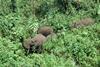
Elephants help forests store more carbon by destroying smaller plants
Elephants do a lot of damage to plants as they stomp around the jungle, but, counterintuitively, this activity increases the biomass of the forest, letting it store more carbon.
-
 Features
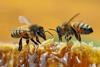
We could use bees’ honey to track environmental lead pollution
Bees’ honey is a surprisingly effective tool for monitoring lead in the environment and could be used to track pollution in areas where more established methods of sampling are hard to organise.
-
 News
NewsNot just carbon dioxide: Other Greenhouse gases
Carbon dioxide is the most common greenhouse gas, but other greenhouse gases are much more potent in smaller concentrations.
-
 News
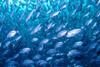
NewsSea life threatened by warmer oceans
The atmosphere affects oceans, and oceans influence the atmosphere. As the temperature of the air rises, oceans absorb some of this heat and also become warmer.
-
 News
NewsWill climate change lead to a new ice age or no polar ice at all?
Ice ages have occurred in a hundred thousand year cycle for the last 700 thousand years, and there have been previous periods that appear to have been warmer than the present despite CO2 levels being lower than they are now. More recently, we have had the medieval warm period and ...