Conventionally, aquatic life is monitored by capturing organisms, either by using nets or scraping under boulders, for examination. These techniques are time-consuming, can harm species and require skilled ecologists. Monitoring fish typically involves using electricity to stun them, which can sometimes prove fatal.
But these techniques could be replaced by simply taking a water sample and analysing the DNA in it. This environmental DNA (eDNA) comes from the cells, waste and blood of organisms.
Thanks to advances in cheap, fast genetic sequencing and in our ability to identify which species the DNA comes from, England’s Environment Agency plans to start using eDNA to monitor fish next year. “eDNA is no longer a concept,” says Kerry Walsh at the Environment Agency.
The agency has a responsibility to monitor the health of rivers and lakes, and the number of species living in these environments can indicate this. The agency began exploring the use of eDNA seven years ago in a bid to make efficiency savings, and now its proof of concept tests suggest that eDNA can be more accurate than established techniques.
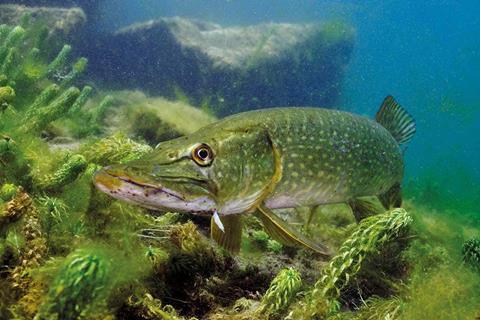
In a recent study at Lake Windermere in Cumbria, eDNA analysis identified DNA from 14 of the 16 species of fish that have ever been recorded there. This is about three times as many species as are usually detected using conventional measures, and included pike and eel.
“Some fish become aware of nets and stay away. Whereas with eDNA it’s in the water, it’s mixed. Fish are great because they are slimy and releasing eDNA all the time,” says Walsh.
The Environment Agency also hopes eDNA will provide an early warning system for the invasive species that rising temperatures are expected to help spread through UK waters. The group is developing procedures, expected to be ready by 2020, to spot four priority non-native species: the quagga mussel, zebra mussel, killer shrimp and demon shrimp. “If we’ve got the tools to detect them early before they’re established, it’s much easier to deal with them,” says Walsh.
However, there are limitations to using eDNA for monitoring lakes and rivers, says François Edwards at the UK Centre for Ecology and Hydrology. While it is good at reflecting the diversity of species present, it is not so good at indicating their abundance.
It is also hard to know whether eDNA shows that an organism is present in a lake now, or was there a year ago but has since died off. And in rivers, the eDNA may have travelled a long way from where the species actually is. Nevertheless, eDNA holds potential, says Edwards.


























No comments yet