Few cities in the world see as much snowfall as Sapporo in winter – almost 6 metres falls on average every year. Heating was obviously a priority for architect Ryo Yamada, but so was the creation of an interior that would be comfortable during long, cold winters indoors but also take advantage of bright, warm summers.
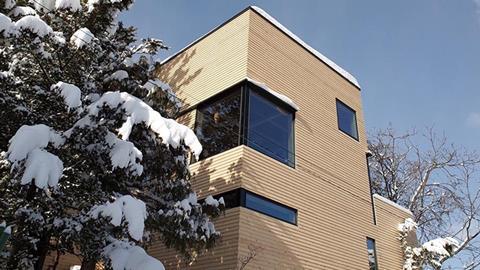
Externally the house draws little attention, a basic cubic form that blends with its residential counterparts, but it is internally that Nakanosawagawa House presents its reinterpretation of the Japanese dwelling.
At the client’s request, the interior was left incomplete. Yamada says, ‘if this house could speak, it would say ‘I dream never to be completed’. The result is a fascinating, ever-evolving interior, based on a simple distribution of pillars and the bridging of areas with playful bridges and ladders. Without the furniture and clutter, all that would reveal the space as a home is the wood-burning stove – the only homely element that hasn’t been stripped back.
At the heart of this ability to customise is the ‘tree house’ floor – an upper area accessed via ladders in which a miniature village of simple wooden houses can be constructed: any number of configurations can change both the nature of the house and how it is experienced.






















1 Reader's comment