This house near the Suffolk coast is spread over three volumes arranged around a central courtyard. Photography by Bene Redmann
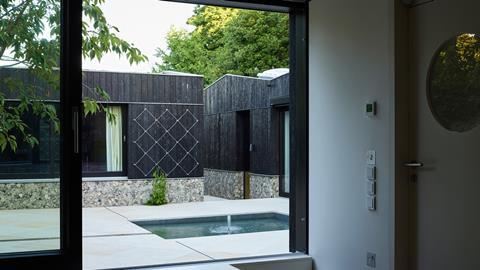
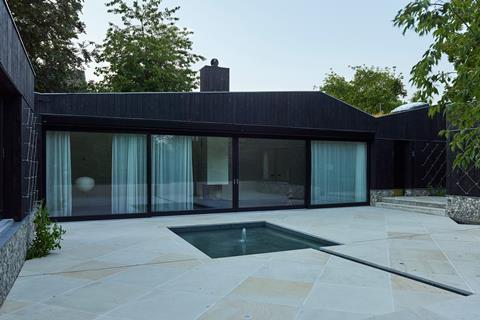
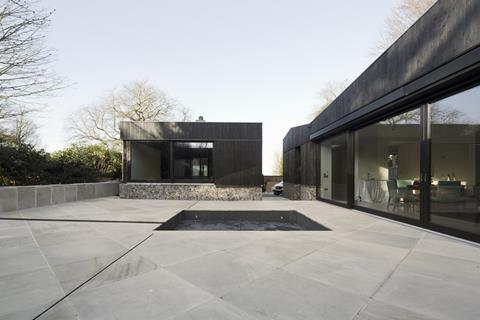
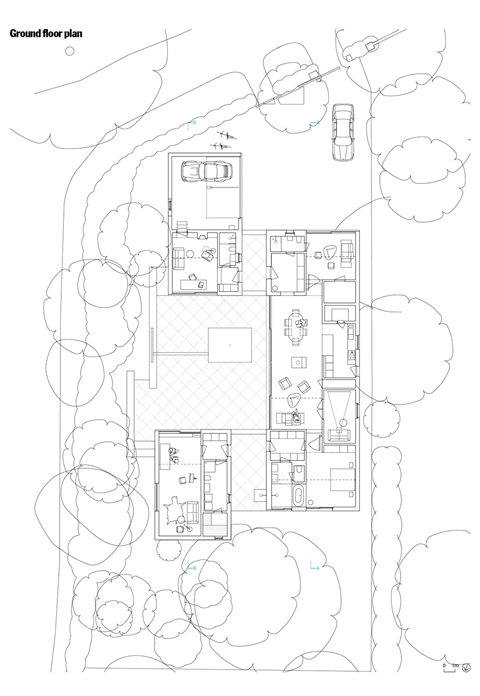
House Peacock is located on the outskirts of a small seaside town in Suffolk, in a residential area typically consisting of generous two and three-storey detached houses. The surrounding dense vegetation provides privacy. Almost all neighbouring dwellings are recessed from the roads, which allows the abundant greenery to become the major lineament of the immediate context. The design, which is arranged around a central courtyard, tries to embrace this quality while corresponding to the owners’ broad space requirements.
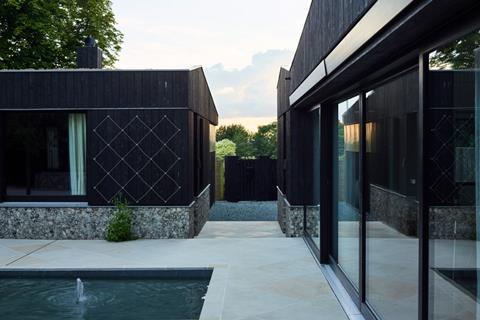
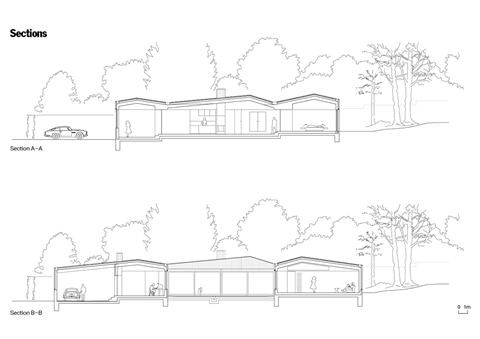
The programme of the build is spread over three volumes as opposed to one extensive development. The single-storey compound divides the site into three different areas: the less-private driveway that links the entrance to the road; the main courtyard – the heart of the arrangement; and the ‘wild’ garden to the east of the property. While the proportion and topography of the site as well as the lush greenery defined the general framework, the owners’ versatile interests and day-to-day requirements called for a contained spatial background as opposed to a design that comes to the fore.
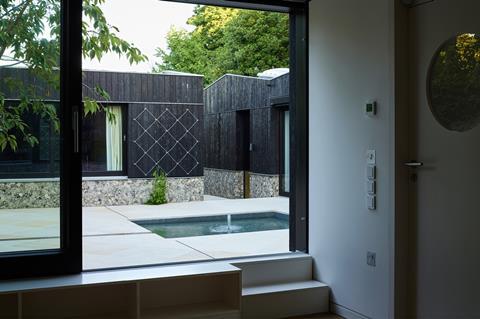
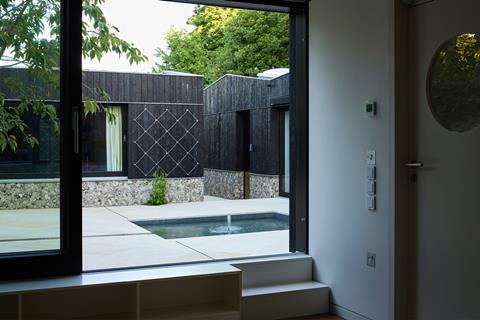
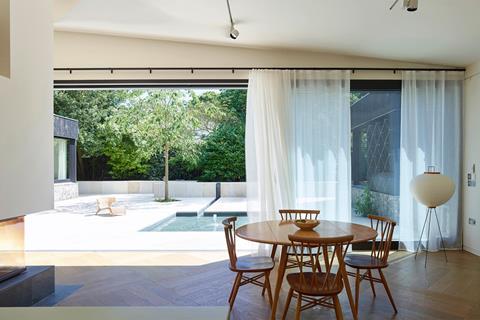
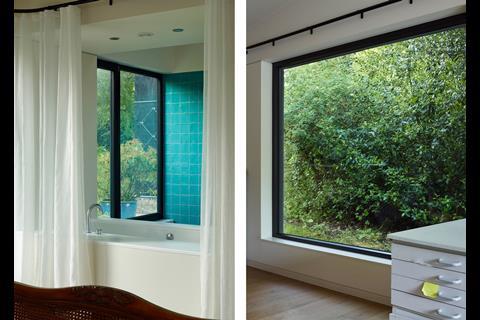
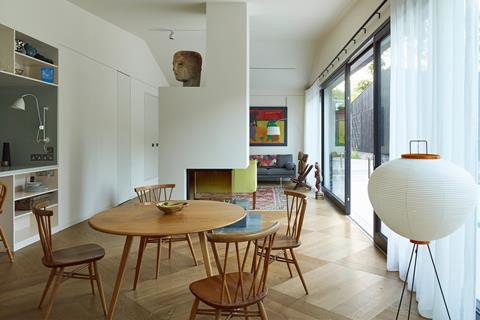
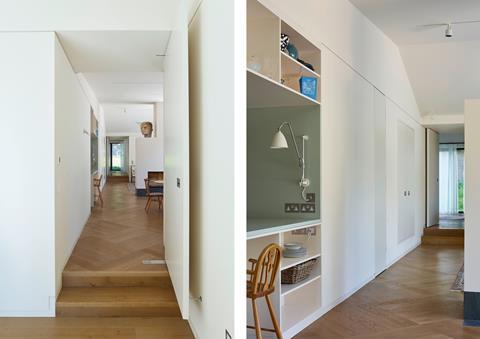
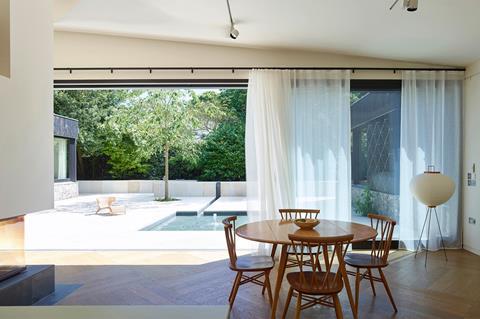
The plan looks rigorous, yet because of the subtleties in different floor levels and roofscape the rooms all have an individual and particular feel. The main living space is generous, opening out through large sliding glazed doors onto the courtyard, being a living space in its own right. There is a nice play of serviced spaces against living spaces keeping the latter concealed as well as movement from one building to another. Intimacy of use has been achieved by keeping guest rooms at the edges of the plan allowing the bathroom, for example, to open up to the garden. The interior finishes are mostly plastered with the hanging rail creating the datum line around the house, off which is hung the owner’s collection of art. An easily accessible art store allows the collection to be inter-changed as required.
Axel Humpert, co-founder, BHSF Architekten
Project data
Start on site
December 2015
Completion
December 2016
Gross internal floor area
264m²
Architects
BHSF Architekten with Studio-P
Executive architects
Axel Humpert and Peter Barry
Structural engineer
Brian Constant, London
Quantity surveyor
Ama, Norfolk
Project managers
Axel Humpert and Peter Barry
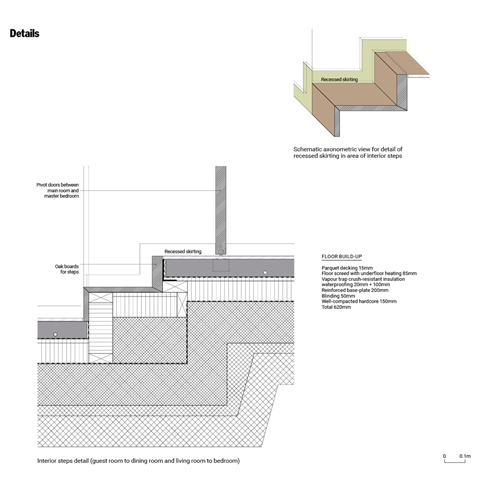
Detail
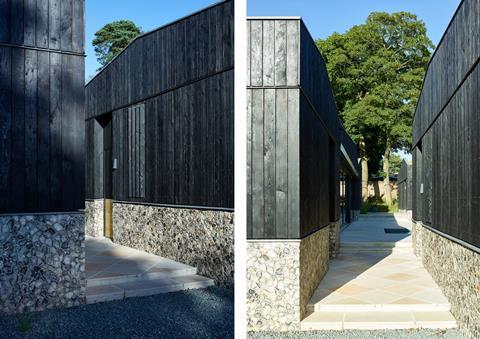
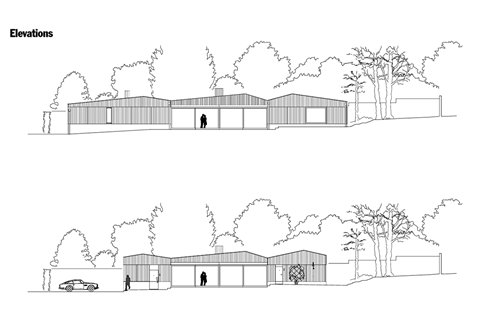
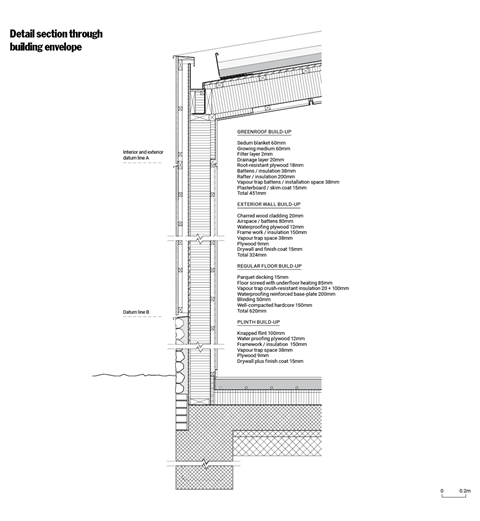
House Peacock was designed with a horizontal plinth that runs across all three buildings creating a datum line across the site. This low-level plinth wall is faced in locally sourced knapped flint, individually cut, placed in position and tied back to the main structure with stainless-steel wall ties. The datum line is created by a pressed metal flashing, which sits above the plinth wall and drains the cladding.
Above this plinth, black charred larch wraps around the three separate buildings split into two horizontal bands. The middle section of cladding gives rhythm to the top of the window line. Above this cladding, a second datum line is created using pressed metal to separate the lower-level from the upper-level charred timber.
The charred timber cladding is fixed to softwood timber battens using black head countersunk screws so the fixings are not highlighted. These battens are attached to the main wall structure, which is a 200mm-thick softwood timber studwork with insulation between studs. Behind the timber battens is a layer of waterproofing to prevent any ingress of moisture. The wall structure is faced internally with two layers of plasterboard.
Axel Humpert, co-founder, BHSF Architekten
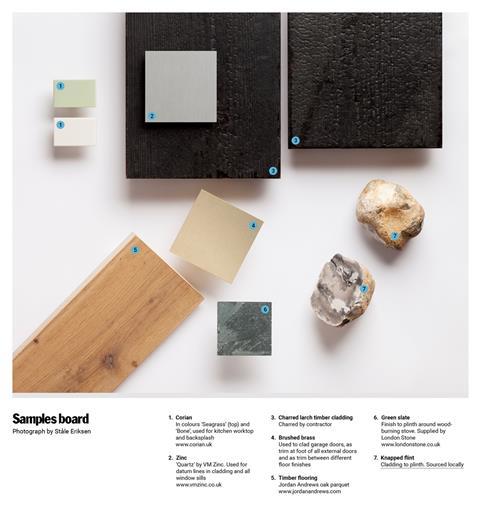
Samples board
1. Corian In colours ‘Seagrass’ (top) and ‘Bone’, used for kitchen worktop and backsplash
Housing associations looking to sign lucrative “strategic partnership” deals with Homes England to build large numbers of affordable homes will have to commit to using modern methods of construction to build out at least 25% of their pipeline.
Rank 2017: 1 - Rank 2016: 1Country: USAArchitects: 2570Income: $1-1.5bn Gensler’s total domination of the rankings continues as it achieves the seemingly impossible task of growing still more after last year’s huge leap in size. At 2,570, the American practice now employs nearly 1,000 more architects than it ...
Nine space-age designs have been revealed as the winners of the Moontopia competition, which asked architects and designers to visualise life on the moon. Entrants to the Moontopia competition were asked to draw up plans for a self-sufficient lunar colony for living, working, researching and space tourism. One winner ...
























No comments yet