












All Chemical Industries Association articles in April 2012
View all stories from this month.
-
 News
NewsTugendhat House
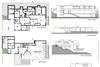
The plan repeats that of the Barcelona Pavilion, the onyx wall and the curved one of Macassar ebony being independent of the cruciform- shaped columns. The floor is of white linoleum, the rug white wool. The curtains are of black and natural raw silk and white velvet. Behind the dining ...
-
 News
NewsTugendhat House construction
Thin + shape columns held in from exterior walls. glazed wall toward views. entry from ‘back’. interior recalls Barcelona Pavilion.
-
 News
News"International style" classic
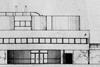
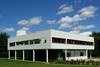
An early and classic exemplar of the “International Style”, which hovers above a grass plane on thin concrete pilotti, with strip windows, and a flat roof with a deck area, ramp, and a few contained touches of curvaceous walls.
-
 News
NewsPure, sleek, geometric envelope
Unlike the confined urban locations of most of Le Corbusier’s earlier houses, the openness of the Poissy site permitted a freestanding building and the full realization of his five-point program. Essentially the house comprises two contrasting, sharply defined, yet interpenetrating external aspects. The dominant element is the square single-storied box, ...
-
 News
NewsLe Corbusier
Charles-Edouard Jeanneret-Gris was born in La Chaux de Fonds, Switzerland, 1887. Trained as an artist, he travelled extensively through Germany and the East. In Paris he studied under Auguste Perret and absorbed the cultural and artistic life of the city. During this period he developed a keen interest in the ...
-
 News
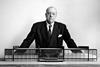
NewsLudwig Mies Van der Rohe
Ludwig Mies Van der Rohe was born in Aachen, Germany in 1886. He worked in the family stone-carving business before he joined the office of Bruno Paul in Berlin. He entered the studio of Peter Behrens in 1908 and remained until 1912. He made major contributions to the architectural philosophies of the late 1920s and 1930s as artistic director of the Werkbund-sponsored Weissenhof project and as Director of the Bauhaus.