















The ranking of the five largest grocery retailers in the North America is unchanged last year despite an extremely turbulent year in the sector. We expect the fallout to continue throughout the year and be evident in 2015 and 2016 results. So be sure to look for next year’s rankings
Walmart, no surprise, dominates the list of largest grocery retailers in the region, its sales dwarfing those of its next largest competitor (Kroger) by nearly 3.5 times. Still, 2014 was a challenging year for Walmart US. Under new Walmart US CEO Greg Foran, Walmart is focused on restoring short-term trading performance, and has announced a key initiative around fresh (meat and produce) to drive supercenter trips and baskets.
Yet with runway for the supercenter format all but exhausted, the focus must turn to redefining the big-box of the future, and surely Walmart must understand that one size does not fit all. Having ditched the Express concept, Walmart remains with a noticeable gap in the small-format space. However, it has positioned Neighborhood Market as a nice smaller-box complement to the supercenter, yielding strong comps and with plenty of expansion potential.
In the second slot is Kroger, the largest conventional grocery store operator in the US. Kroger is working to fill in existing markets where it is not fully developed and expand its footprint into new markets. Its 2014 acquisition of Harris Teeter has been instrumental in its push into the Southeast and Mid-Atlantic. The acquisition also provided the platform for what has become ClickList, the click & collect scheme the company is now rolling out across its stores.
Growth through acquisition
With value a watchword among consumers and Walmart, Aldi and the dollar store contingent keeping price competition stiff, organic sales growth has been difficult to achieve. As a result, mergers & acquisitions have become the default for growth-minded players, particularly given the increased presence of private equity investors in the sector.
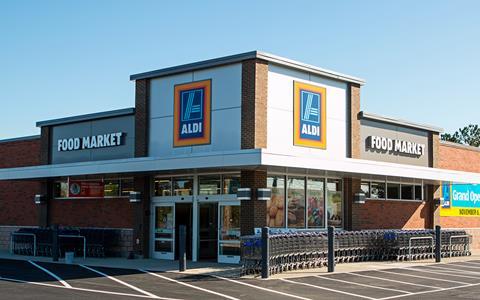
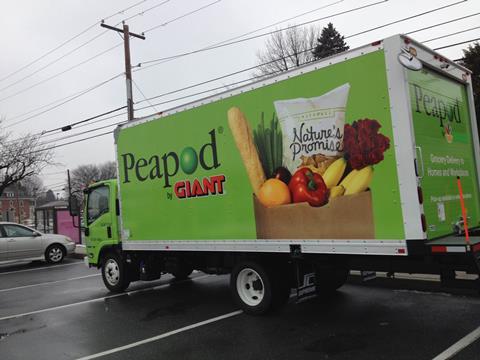
The past year saw Albertsons continue its streak of acquisitions, culminating with the purchase in early 2015 of Safeway. In early July, Dollar Tree finalised its acquisition of Family Dollar, the joint company likely to earn a place among the Top 20 next year. Netherlands-based Ahold, which operates Stop & Shop and Giant stores on the East Coast, has agreed to buy Belgium-based Delhaize Group, whose US holdings have been pared back to only Food Lion and Hannaford stores.
“I think that we are moving faster today than we moved a year ago. I can see progress in certain areas. But I think in today’s environment, that pressure needs to be there.”
Doug McMillon, Walmart CEO
The deals bring with them potential for cost savings from synergies, but also risk if integrations are poorly handled and a customer-first strategy isn’t maintained. Plus, it’s worth noting that some of the deals are taking place in markets where Top 20 best-in-class regional players like H-E-B and Publix dominate.
A post-Target Canada
This spring saw Target exit Canada. Despite having a physical store presence for only two years, Target will leave a lasting impact on the Canadian retail landscape for years to come. Target’s announcement in January 2011 set Canadian retailers (and Walmart and Costco) into overdrive preparing for the US retailer’s entry and prompting strategic initiatives that several are still absorbing.
Sobeys, for instance, is still working to achieve the anticipated CAD200 million in annual cost savings from the 2013 acquisition of Safeway’s Canadian operations, by closing stores, eliminating jobs and shuttering DCs. Loblaw, meanwhile, announced it will close 52 stores, a good portion likely to be Shoppers Drug Mart locations, signaling an increasing focus on profitability in what has been a very price-driven market. And while the domestic players no longer have Target to contend with, Walmart is very much present and continuing to invest heavily in supercenters, through new builds, conversions of discount stores, and the acquisition of former Target sites.
E-grocery trials aplenty
The long-awaited migration to online grocery shopping is underway. While only a handful of the Top 20 have a true online grocery offer (either home delivery or click & collect), there are no shortage of trials. More retailers are rolling out click & collect and home delivery, or partnering with others for third party fulfilment.
Walmart is increasingly testing several approaches concurrently in online grocery. In its hometown of Bentonville, AR, it has set up a Grocery Pickup facility, where shoppers who have placed online orders can drive up and retrieve orders in as little as two hours. It also has online grocery with either store collection or delivery to central locations, such as office campuses.
Whole Foods has partnered with Instacart for home delivery since autumn 2014 and, more recently, for instore collection in selected markets. Costco and BJ’s also have partnered with Instacart in selected markets. Seven & I has given new meaning to the term convenience store – its 7-Eleven banner is partnering with delivery service Postmates in select cities to offer household products, prepared food and medicines.
Outlook
- The Top 20 are forecast to add about USD182 billion in sales through 2019. The Top 3, however, will account for nearly two-thirds (63%) of the absolute dollar growth.
- Competition will remain intense, particularly in the mid-tier, leading to further consolidation or – in the case of Great Atlantic & Pacific Tea Company (A&P) – bankruptcy.
- Ambitious new store opening plans by dollar stores and Aldi, as well as the pending arrival of German hard discounter Lidl, will prompt conventional grocers as well as Walmart and Target to rethink not only format strategy but also their pricing.
- We’ll likely begin to see the proof of concept for some of the initial small and urban format tests launched by several of the Top 20. Will they be viable or will they go the way of Walmart Express?
- And finally, we’ll likely see not only the uptake of e-grocery, but gain better understanding of how consumers prefer to shop the category (e.g. home delivery, pick-up instore, pick-up at a collection point), which has huge implications for the mode’s profitability.