















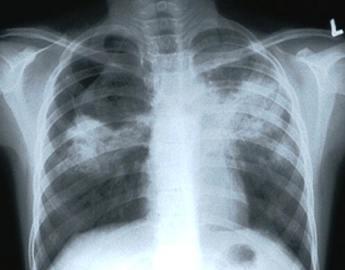
Tuberculosis is an infectious disease, deemed a global public health emergency by the World Health Organization. Although TB is reducing in incidence worldwide, multi-drug-resistant cases are on the rise
Tuberculosis (TB) is an infectious disease transmitted by Mycobacterium tuberculosis and it was declared a global public health emergency in 1993 by the World Health Organization. In terms of deaths due to infectious disease, it ranks second only to HIV.1
Since 1990, the global incidence of TB has fallen, and has been associated with a 41% reduction in the TB mortality rate.1 However, the incidence of multi-drugresistant TB (MDRTB — resistance to at least isoniazid and rifampicin) is increasing, which threatens global TB control because treatment then requires the use of combinations of less efficacious and potentially more toxic drugs.
Epidemiology
Despite improvements in TB surveillance, TB continues to be a major global health problem; in 2011, there were an estimated 8.7 million new cases and 1.4 million deaths worldwide.1
In the UK, TB is a notifiable disease and cases are reported to Public Health England (formerly the Health Protection Agency), Health Protection Scotland or Public Health Wales. In 2011, the HPA said that there were 8,963 cases reported in the UK, where the incidence has risen steadily between 2000 and 2011 (6,724 to 8,963 cases).2
Three-quarters of UK TB cases are patients born outside the UK, and most of these are from South Asia and sub-Saharan Africa.
In 2011 in the UK, 8.4% of cases had resistance to at least one first-line antibiotic, most commonly to isoniazid, whereas MDRTB was found in 1.6% of cases.2
It has also been estimated that 14.8% of all adult TB cases worldwide are attributable to HIV infection, and in 2007 it is thought that 456,000 people died of HIVassociated TB. TB/HIV co-infection rates are greatest in Africa, accounting for 79% of all worldwide cases.3

No comments yet