Mateschitz was not talking specifically about the energy drink on which his fortune is built, but the philosophy which embodies his now-multiplatform, multinational, multi-billion dollar company.
“It provides skills, abilities, power to achieve whatever you want,” added the Austrian, who has created an environment that encourages innovative minds and ideas.
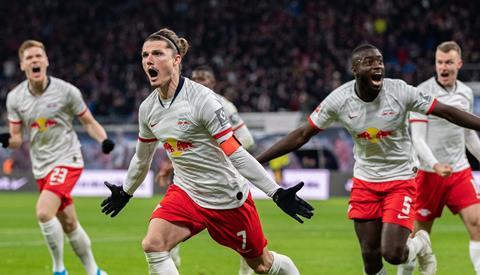
RB Leipzig, and 32-year-old head coach Julian Nagelsmann, are a case in point.
Only a decade ago they were making their debut in the fifth tier of German football - on Wednesday, they will play in the Champions League knockout stages for the first time.
But it has taken more than Red Bull throwing money at the project for the east German club to establish themselves among the country’s elite.
When Nagelsmann picks his side to face Tottenham Hotspur in north London, it will be thin on household names and contain no player acquired for more than £20m.
So how did Red Bull turn a club playing regional football into genuine Bundesliga title contenders (they sit second, one point behind champions Bayern Munich), what is in it for one of the world’s most well-renowned companies and are Leipzig really the most hated club in Germany?
How it all began for Red Bull in Germany
Few in Germany were open to the idea of Red Bull chief Mateschitz bankrolling a club when it was first touted in 2006, and initial plans to invest in a different Leipzig side, FC Sachsen Leipzig, were rebuffed by the German football association, the DFB.
Fan protests followed as Red Bull explored potential takeovers at St Pauli, 1860 Munich and Fortuna Dusseldorf, before reverting to the initial plan of acquiring a Leipzig-based team.
The historical landscape of football in Leipzig is complicated, with a number of clubs having formed and disbanded since the founding of the DFB in the city in 1900. The Nazi regime, Soviet rule and subsequent reunification of Germany also led to varying league formats.
FC Lokomotive Leipzig enjoyed success before the reunification, losing to Ajax in the 1987 European Cup Winners’ Cup final, but, after a rebrand as VfB Leipzig, their relegation from the Bundesliga in 1994 spelled an end to the city’s representation in the German top flight.
Until Red Bull purchased the playing licence of fifth-tier SSV Markranstadt.
Before the rebranded RB Leipzig even kicked a ball in the 2009-10 season there was outcry in Germany, but it was nothing the company had not experienced before.
Many supporters felt alienated when Red Bull acquired Austrian top-flight side SV Austria Salzburg in 2005 and changed their name to Red Bull Salzburg, plus the club badge, staff and kit colour.
In Germany - after years of research and negotiations - they decided to start from the bottom and work up.
By the time RB Leipzig reached the Bundesliga in 2016 the city had been without a top-flight team for 22 years and there had been no side from the former East Germany in the division since Energie Cottbus were relegated in 2009.
That open market presented an opportunity.
“It is good for the city, good for the eastern part of Germany,” Guido Schafer, who has charted RB’s rise as chief reporter at the Leipziger Volkszeitung, tells BBC Sport.
“The whole city loves RB Leipzig - apart from the two traditional clubs, Chemie and Lok Leipzig - and everyone knows how worthwhile it is to have such a club in the city.
“The fanbase is also growing. Now nearly every match is sold out with 40,000.”
That love for the Red Bull-backed club is not shared across the country, and even in their inaugural season RB Leipzig faced a backlash from opposition supporters.
DFB laws state German clubs must operate on a “50+1” rule, meaning members - essentially fans - own the majority of shares and can influence decisions such as ticket prices.
Rivals feel RB Leipzig exploited the system by having just 17 members with voting rights - most are directly linked to Red Bull - and got around a law stating teams must not be named after sponsors by officially calling the club RasenBallsport Leipzig, which translates as LawnBallsport Leipzig.
RB are often referred to as the “most hated club in Germany” and still face regular protests from opposition fans, ranging from boycotting games to the arrest of 28 Borussia Dortmund fans for throwing cans and stones at rival supporters in 2017.
The dislike goes further. Speaking to BBC World Service when Leipzig were first promoted, Dortmund CEO Hans-Joachim Watzke called RB “a club built to push up the revenues for Red Bull” while earlier this month German football magazine 11 Freunde refused to cover the top-of-the-table fixture with Bayern Munich, whose supporters brandished offensive placards.
But Schafer is confident Leipzig and boss Nagelsmann, someone he labels “a genius”, are winning people over with their attractive football and intense, high-tempo, pressing game.
“There were some protests, especially from Dortmund, Augsburg and Union Berlin fans, but in Germany and in Europe the respect is growing every day,” he explains.
“It’s a very good situation for Leipzig and also for the football in Germany that they are at this standard now.”








No comments yet