Private equity and venture capital lawyer Shawn Atkinson of Orrick explains why the UK’s capital will remain a global financial centre, even after the country exits the EU.
In the four months since the Brexit vote, there have been plenty of predictions and statements, many of which have been based on emotion rather than fact, taken out of context or just inflammatory.
I have heard otherwise respectable people express (or repeat) complete nonsense about Brexit. A senior banker in a major European city, for example, told me Britain had made it ‘virtually illegal’ for EU citizens to do business in London.
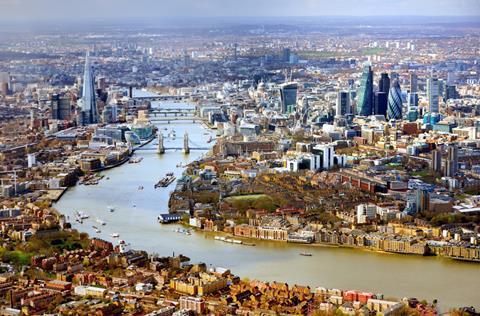
Source: Alamy stock photo
London is a global city first
Speculation about something so important is, at best, dangerous. In an effort to cut through the hysteria and half-truths, it is important to keep an eye on the facts.
London is almost four times the size of the next largest city in the EU. You have to combine Berlin, Paris, Madrid, Rome and Barcelona to match its population. With that size comes economy, scale and importance as a market and trading partner.
London is a global city first, and a European one second. It competes with New York, Tokyo and Hong Kong, not Brussels and Rome.
The English language dominates international business. I was recently at a tech event which devolved into a heated discussion over whether the new EU business language would be French or German. Meanwhile, I was chatting to two Romanians and a Portuguese contact, in English.
Britain will continue to lead the EU innovation culture. Some statistics have suggested the brain drain into London will stop in favour of Berlin, Paris or Dublin. It may be the case that some of Europe’s bright sparks will now think twice before heading to London, but the UK tech sector will remain dominant for too many reasons to list, including a highly favourable tax regime, a legal system that works and the necessary components of a vibrant tech ecosystem in place, such as leading financiers and advisors.
“some of Europe’s bright sparks will now think twice before heading to London, but the UK tech sector will remain dominant”
Shawn Atkinson
Infrastructure is important. People complain about Heathrow, but flying into any EU city is worse. There are endless strikes from air traffic controllers and baggage handlers. Besides, if everyone leaves: where are they going to move to, which schools will their children attend, which roads will they drive along? It is hard to imagine Frankfurt’s four English-speaking high schools housing all the London exiles’ children.
Greenwich Mean Time and the international date line aren’t moving. The location of the world’s clock was a stroke of brilliance by the UK. Five hours to New York is feasible, six less so. Nine hours to San Francisco? Tougher still.
Where’s the alternative? An American private equity professional based in the UK told me the day after the vote that he was thinking of packing his bags. I asked where he planned to move to instead – back home? “Gosh, no”. Was it Spain, Greece, Poland, France, Germany? “No, those don’t tick my bucket list.” He quickly concluded that, in or out, the UK was just fine.
I was one of the 48 percent on the wrong side of the vote, but democracy is paramount and it is important to look forwards not backwards. I feel confident the future will be full of promise for the UK, in or out.
Adult beaver at Knapdale
Three more beavers have been successfully released into the wild at Knapdale Forest in Argyll. They are the first to be introduced since ministers declared them a native species, having been extinct for centuries.
Financial instruments with a total outstanding notional value of US$370trn are estimated to be exposed to the interbank offered rates, which will have to be moved to alternatives such as Sonia or Sofr, according to international financial markets trade bodies.
Ford Motor Credit Company woke the reverse Yankee market up last Thursday, coming with a combined €1.25bn two-part deal split between five-year FRN and seven-year fixed tranches.
Moody’s has downgraded provisional ratings on an unfunded CDS from an HSBC CLO hit by the collapse of Carillion. Carillion went into liquidation in January.





















No comments yet