














Features
How John Lewis in Cheltenham is set to be at the centre of the 5G mobile revolution
Planning application lodged with borough council for upgrade of equipment on shop’s roof

A new level of intelligence, developed with leading analysts and industry experts
Visit Now

Take out a print and online or online only subscription to get immediate access to:
Alternatively REGISTER for an additional 2 free accesses and sign up for email alerts
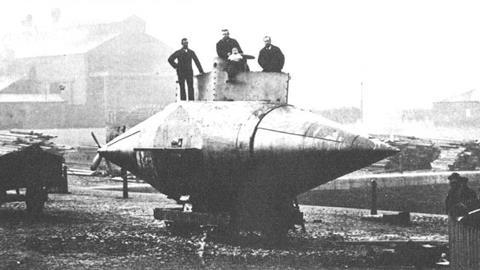
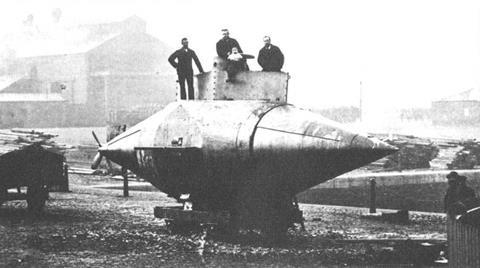
A group of Cheshire divers have taken part in a conservation project to save the wreck of the “world’s first powered working submarine”, the Resurgam II.
The submarine, which was designed by a Manchester clergyman in 1879, sank in the Irish Sea off the coast of Wales.
Divers from the British Sub-Aqua Club (BSAC) in Chester have placed metal corrosion inhibitors on the wreck.
Club member Chris Holden said the submarine was in “remarkable condition” after being underwater for 132 years.
The Chester divers were assisted in the dive by members from the BSAC’s Flintshire branch.
Mr Holden said it was a fascinating wreck which divers can “see right down into”.
However, he said it would be “almost impossible to go inside [as] it is so narrow, it would have to be a slim person and without an aqualung”.
“In any case, there would be no point because it would probably wreck what was inside. There is loads of silt in it and at one time the only resident was a conger eel,” he said.
He said the “sacrificial” zinc anodes placed on the wreck would encourage the natural corrosion caused by the water to take the zinc first before the iron, therefore giving some protection to the submarine.
He added that underwater conservation had been undertaken because “raising the Resurgam would not be an insurmountable problem, but preserving it once it was on shore would be a major financial problem”.
The 45 ft (13 m) vessel, designed by Manchester’s Reverend George William Garrett, was built in Birkenhead in 1879 and cost about £1,500.
It was steam powered and could accommodate three sailors.
After a successful trial off Wallasey, it set off for a demonstration to the Royal Navy in Portsmouth in 1880.
However, after leaving Rhyl following a stop for modifications, it shipped water and sank around five miles off the coast of north Wales.
It was found in 1995 by Chester diver Keith Hurley who was investigating what a fishing trawler had snagged its nets on.
A replica of the submarine can be seen close to the Woodside terminal of the Mersey Ferry in Birkenhead.
Planning application lodged with borough council for upgrade of equipment on shop’s roof

People wishing to linger at Cromford railway station in Derbyshire can do so overnight, as the waiting room is now a holiday cottage. The stone building, with the original pitched roof, is situated on the now disused southbound platform. It was used by Oasis on the cover for their 1995 ...

Irlam is the busiest unmanned station in Greater Manchester and its station house was reopened in 2015 after a £2m makeover, restoring it to its former glory after being left derelict for nearly 25 years. The renovation recreated how it looked when it was first built, including paintwork in the ...
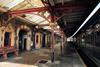
The station at Great Malvern, Worcestershire, retains an aura of wealth and sophistication. Its tea shop was once the exclusive waiting room of Lady Emily Foley, a key sponsor of the building. But she was not the only person to have a special hideaway at the station. A newspaper article ...






No comments yet