












COPY OF:COPY OF:Listings – Page 13
-
 News
NewsNASA: | Citizen Scientists: Data for the World
JunoCam is the “citizen science” camera on board Juno. As the spacecraft orbits Jupiter, JunoCam snaps pictures of the planet from different angles and radial distances, targeting features identified in part through the collaborative efforts of the amateur astronomer community.
-
 News
NewsNot just carbon dioxide: Other Greenhouse gases
Carbon dioxide is the most common greenhouse gas, but other greenhouse gases are much more potent in smaller concentrations.
-
 News
NewsSolar influences
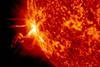
The sun is the primary source of Earth’s heat, so relatively small changes in solar output can affect our climate. Satellite observations since the late 1970s have shown a slight decrease in the sun’s total energy output. However, instead of cooling, the Earth has warmed over this period. Also, warming ...
-
 News
NewsGreenhouse gas emissions
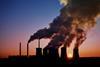
Evidence that CO2 emissions are the cause of global warming is very robust. Scientists have known since the early 1800s that greenhouse gases in the atmosphere trap heat.
-
 News
NewsThe Earth’s natural climate cycle
Over the last 800,000 years, there have been natural cycles in the Earth’s climate, between ice ages and warmer interglacial periods. After the last ice age 20,000 years ago, average global temperature rose by about 3°C to 8°C, over a period of about 10,000 years.
-
 News
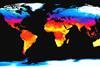
NewsIs the current climate change unusual compared to earlier changes in Earth’s history?
Climate has changed on all time scales throughout Earth’s history. Some aspects of the current climate change are not unusual, but others are. The concentration of CO2 in the atmosphere has reached a record high relative to more than the past half-million years, and has done so at an ...
-
 News
NewsThe Causes of Climate Change
Scientists attribute the global warming trend observed since the mid-20th century to the human expansion of the “greenhouse effect”1 — warming that results when the atmosphere traps heat radiating from Earth toward space. Certain gases in the atmosphere block heat from escaping. Long-lived gases that remain semi-permanently in the atmosphere ...
-
 News
NewsClimate Change: How Do We Know?
The Earth’s climate has changed throughout history. Just in the last 650,000 years there have been seven cycles of glacial advance and retreat, with the abrupt end of the last ice age about 7,000 years ago marking the beginning of the modern climate era — and of human civilization.
-
 News
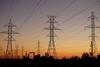
NewsThe national grid – how to beat latency and save the world
National Grid, which runs the UK’s national electricity network, said its profit for the 12 months to 31 March was down by nearly a third from £2.7bn the year before. It wrote off £137m of costs spent to connect two nuclear UK projects in Cumbria and Wales that were cancelled, ...
-
 Features
How to create your own personal brand
Building a personal brand involves creating a recognisable professional profile which you can grow both online and offline, and use to market yourself to prospective employers.
-
 Features
Tactics to combat stress at work
Learn to recognise the areas of stress at work we can control and do something about, and discover six tactics to employ to alleviate that stress and put things into perspective.
-
 Features
A beginner's guide to budgeting
Project Mastery looks at how to budget and save money to help you prepare for the future.
-
 Features
How to make stress your friend
While stress has been made into a public health enemy, new research suggests that how you think about stress matters and that it may only be bad for you if you believe that to be the case.
-
 News
NewsSea life threatened by warmer oceans
The atmosphere affects oceans, and oceans influence the atmosphere. As the temperature of the air rises, oceans absorb some of this heat and also become warmer.
-
 News
NewsDesertification is greatest threat to planet, expert warns
UN’s top drylands official says people must be paid via global carbon markets for preserving the soil
-
 Features
How climate change is affecting the world’s forests
Forests are important in determining the accumulation of greenhouse gases in the atmosphere; they absorb 2.6 billion tonnes of carbon dioxide each year, about one-third of the carbon dioxide released from the burning of fossil fuels.
-
 News
NewsWill climate change lead to a new ice age or no polar ice at all?
Ice ages have occurred in a hundred thousand year cycle for the last 700 thousand years, and there have been previous periods that appear to have been warmer than the present despite CO2 levels being lower than they are now. More recently, we have had the medieval warm period and ...
-
 White papers
Increasing efficiencies within different third party compliance programs
This Blue Umbrella whitepaper will guide you through the strengths and weaknesses of two different compliance models and show how to improve programs operating on either model.
-
 White papers
UK Pub Market Report
The UK pub market is set to grow by 1.6% this year. This 200-page report provides insights and data on the UK pub market, its competitive landscape, product and price movements, consumer behaviour and factors for future growth.
-
 News
NewsGalliford Try still dogged by Aberdeen road headache
Firm in ‘constructive dialogue’ with client over ‘significant’ claims on scheme