France’s premier fromagier names five lesser-known varieties that every cheese aficionado should add to their rotation.
In some circles, Roland Barthélemy is known as The Pope of Cheese. Owner of the highly acclaimed Fromagerie Barthélemy in the heart of Paris, he has a leadership role in La Guilde Internationale des Fromagers and helped bring the cheese trade into the Concours de Meilleurs Ouvriers de France (France’s prestigious professional competition). He’s also a cheese diplomat – his title, specifically, being Ambassador of the French Patrimony of Cheese.
As part of these duties, Barthélemy recently visited the States to promote a new partnership with French cheese giant Savencia; needless to say, we wanted to pick his brain. Together, they are importing a select few types of under-the-radar French cheese to the US for the first time – part of Barthélemy’s enduring mission to spread the fromage gospel, and bring smaller and more esoteric types of cheese into the spotlight. Here are 5 lesser-known kinds of cheese he loves right now:
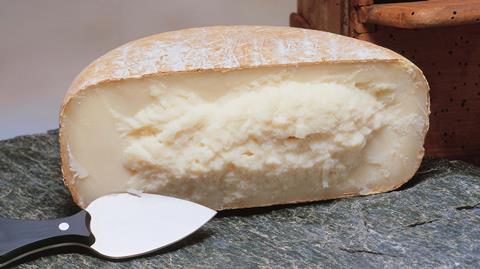
Esquirrou
Texture: Medium-hard
This cheese, a smaller version of the umbrella variety Ossau-Iraty, is indigenous to France’s Pays Basque. Barthélemy says all these cheeses are made “from a single breed of sheep, the black- and red-head manech” [yes, in French, they’re literally tête noire and tête rouge]. “Aged for a minimum of three months,” says Barthélemy, “this smaller 5 lb format develops its aromas differently than its larger cousins – most Ossau-Iraty are wheels of 10-15 lbs.”
What does it taste like? According to Barthélemy, “The flavour profile is an alchemy between the animal, its feed, its milk, the terroir, and the cheesemaker and affineur [cheese-ager]. It finds a perfect balance and true perfection.”
Roland’s pairings: Pear, thinly-sliced serrano ham, wheat cracker.
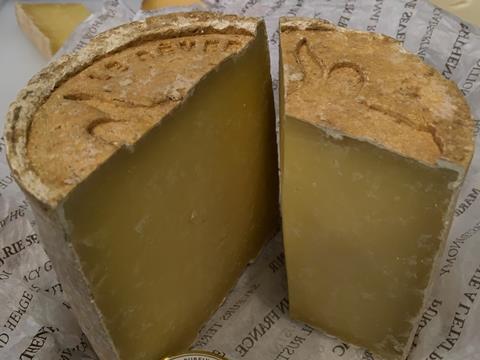
Le Severac
Texture: Hard
Barthélemy explains that Le Severac, “made from the rich milk of Salers cows,” is produced in the southern-central Cantal region. This cheese – a subset of the Salers PDO (Protected Denomination of Origin), which typically comes in much larger wheels – has been produced by the same family in Auvergne for over a century.
What does it taste like? According to our cheesemonger, “Le Severac’s raw cow’s milk is aged in stone cellars for 9–12 months, resulting in spicy, peppery notes.”
Roland’s pairings: pear, raisins.
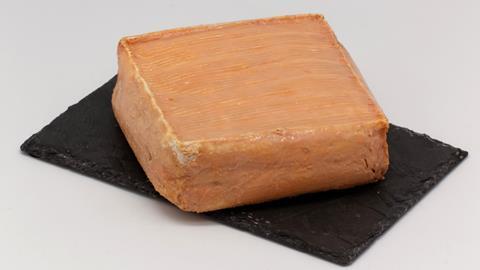
Maroilles Fauquet
Texture: Soft
Cow’s milk cheeses of this type have been made in France since the middle ages, though Barthélemy says today’s leading producer – Paul Fauquet – “was founded in 1925.” In general, “the making of the Maroilles is similar to the Pont Leveque or Munster.”
What does it taste like? This cheese “features a distinctive bright orange rind and a creamy, unique, salty tang.” It is during the ripening, with brining and regular brushing, that “its orange colour develops, and its bouquet emerges, with a sweet lingering aftertaste.”
Roland’s pairings: cured salmon, fresh parsley, wheat cracker.
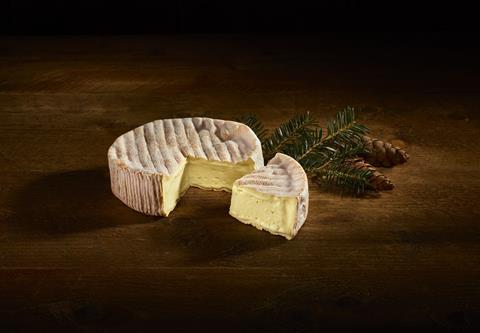
Le Montagnard des Vosges
Texture: Soft
Cheeses like this have been made in the Vosges mountains, near the eastern border with Germany, since the early 1900s. “This soft cheese has a truly unique silky texture,” says Barthélemy. He explains that this cheese is made of so-called “mountain’s milk” – the “Montbeliarde cows graze at a minimum of 2,000 feet of altitude, where the floral varieties are very diverse.”
What does it taste like? “More than 120 flowers and grasses grow in the mountains,” says Barthélemy, “giving an exceptional feed to this breed of cows.” The milk that goes into the cheese is rich in fat, and “the soft-ripened, smooth and creamy cheese develops earthy tones as it ages.”
Roland’s pairings: thinly-sliced cucumber, edible flowers, walnut bread.
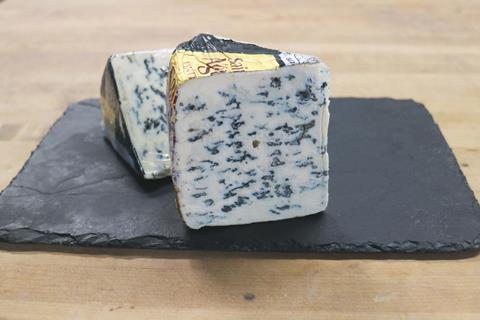
Saint-Agur
Texture: Soft
This popular cow’s milk blue cheese, produced in Monts du Velay in the department of Haute-Loire, “contains 60 per cent buttercream, qualifying it also as a double-cream cheese.” According to Barthélemy, each 4–5 lb cheese takes 4–5 full gallons of milk to produce.
What does it taste like? “Often,” says Barthélemy, “I hear people say, ‘I do not like blue cheese,’ but it’s only because they have been exposed to harsh blues.” When people have a taste of Saint-Agur – buttery, smooth, tangy, creamy – “they realize they actually do like blue cheese.”
Roland’s pairings: Fresh banana, Madagascar pepper, toasted baguette. Hear us out on this one – we tried it, and it works.
How to enjoy them…
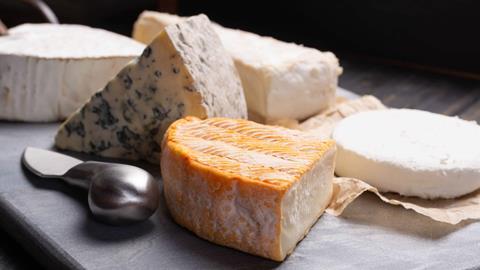
We suggest assembling a French cheeseboard. Barthélemy says “you should mix the milk (sheep, cow, goat), colour (soft-ripened, washed, blue, etc.) and the textures (from soft to hard).” After that, mix in some simple pairings – “Add some crunch with bread or cracker, different texture like an apple, and unexpected flavour like ham.”
For purists who like to sample the cheeses without accompaniment, follow his simple tasting rules. “For hard cheeses,” says Barthélemy, “you take a very small portion in your hand and roll the piece between two of your fingers” (to assess the texture). After, break the cheese in half to smell it – “this will give you cues on the aromas – floral, wood, earthy, honey, etc.” While chewing, “breathe in through your mouth and remove the oxygen through the nose, which will give you all the flavours of the cheese.”