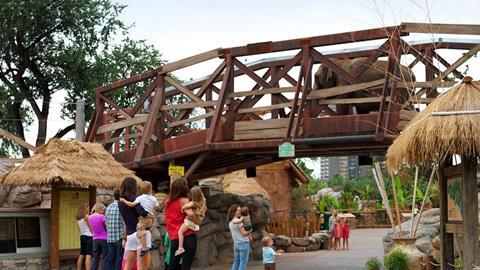
Zoos are opening the gates of traditional pens to let animals roam the grounds high above their human visitors. In Denver, elephants and rhinos take a rustic-style bridge to cross between recreation areas as people watch from below. At Florida’s Jacksonville Zoo and Gardens, tigers are free to roam a new trail that loops around exhibits of babirusa pigs, Asian small-clawed otters and Visayan warty pigs—many of which would be their prey in the Asian tropics.
The Philadelphia Zoo this spring opened Big Cat Crossing, an elevated, steel-mesh-enclosed trail for tigers, pumas and leopards to travel to investigate when they hear or smell something in other parts of the zoo. “Now we’re seeing this picture unfold of what these animals might do in the wild,” says Tammy Schmidt, curator of carnivores at the Philadelphia Zoo.
The developments represent the latest expansion trend by zoos to give animals more freedom and stimulation, and to attract greater numbers of visitors. When animals seem happier and more active, guests tend to come back more often, zoo officials say.